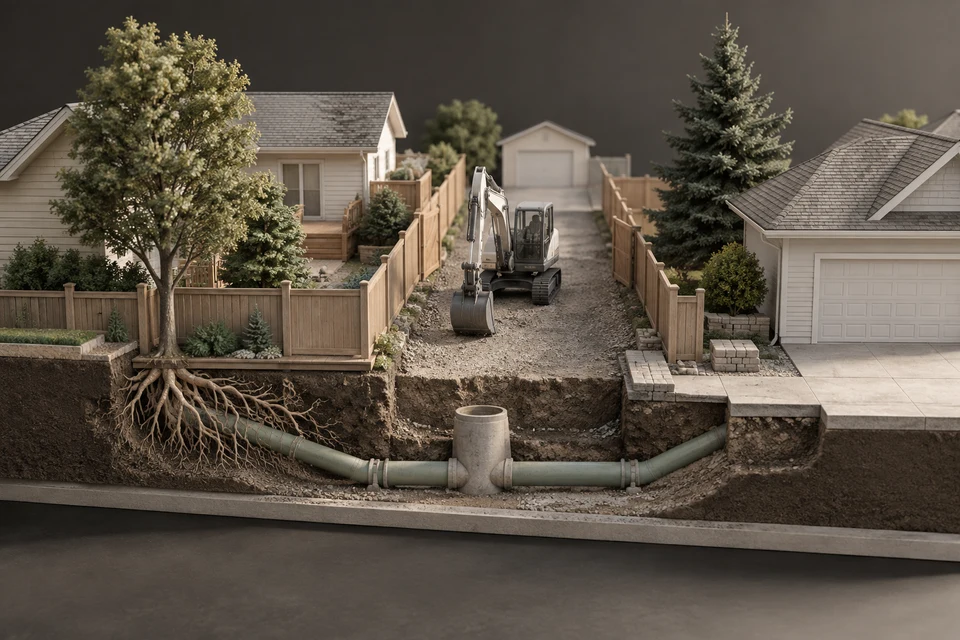
Most Calgary households stay home during a sewer line replacement. The disruption is a set of no-drain windows, usually several hours on connection day for open cut and a longer stretch on a lining day, plus a fenced trench, a blocked driveway and machine noise. Plan water use around those windows, keep children and pets away from the work zone, and tell the crew at once about any sewer smell.
- The house loses its drain only while the old pipe is cut and the new one is not yet connected; ask for that window every morning.
- Anything that drains counts: toilets, sinks, showers, the washer and dishwasher, and appliances that drain on their own, such as a softener or furnace condensate.
- An open trench is a real hazard; children and pets stay outside the fencing, and the site must be secured every night.
- Hydrogen sulphide in sewer gas smells of rotten eggs but can dull the sense of smell, so a fading odour is not proof it is gone.
- The first days after the job are for watching: slow drains, gurgling or a sinking trench are worth a call while the crew is still engaged.
01 /Can you stay in your house during a sewer line replacement?
Usually, yes. A residential sewer replacement in Calgary is a few days of disruption, not a move-out job, because the house keeps its water, power and heat throughout. What it loses, for part of certain days, is the ability to drain anything. With a plan for those hours, most families carry on with school and work around the crew.
A few situations make a stay elsewhere worth considering: an under-slab job that seals off the basement where someone sleeps, a household member with medical needs that depend on a working bathroom, a lining day that keeps the drain out for most of the day, or a winter job where doors and gates stay open to the cold. Ask the contractor to describe the worst day in hours, then decide.
02 /When can't you use water, and for how long?
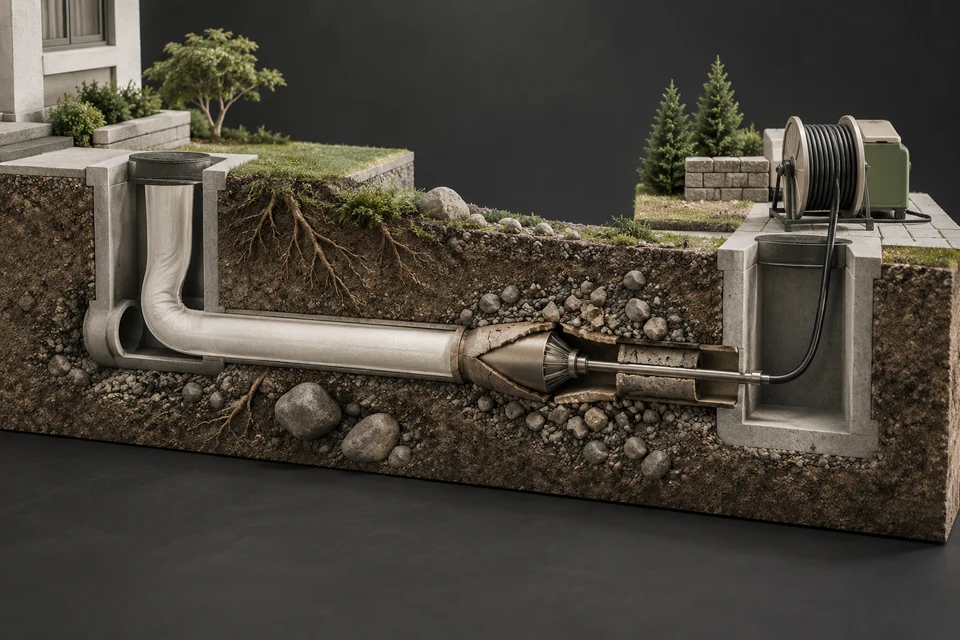
Only while the drain is physically interrupted. On an open-cut job that is typically several hours on the day the old pipe is cut out and the new one connected; on trenchless jobs the window depends on cleaning and curing time. The table gives planning ranges; your crew's morning briefing gives the real ones.
| Method | When the drain is out | Typical length |
|---|---|---|
| Open cut | Connection day, from cutting the old pipe to connecting the new | Several hours, sometimes a second short window |
| Lining (CIPP) | From cleaning the host pipe through curing and reinstating | Much of the working day |
| Pipe bursting | While the new pipe is pulled and connected at the pits | Several hours |
| Spot repair | While one section is cut out and couplings go on | A few hours |
| Under-slab work | While the building drain is open indoors | Can span more than one day in stages |
The same method-by-method days feed the Replacement Timeline Planner, and the hour-by-hour crew work is laid out in what a sewer replacement crew does day by day.
03 /How do you plan a household around the no-drain window?
Treat it like a short, scheduled outage. The work is done the evening before, and on the day itself the only jobs are to keep taps closed and to know where everyone will use a washroom.
- The evening before
Run the dishwasher and the laundry, and have the showers you need. Empty the kitchen sink and any laundry tub.
- Stop automatic drains
Ask the crew about anything that drains without being touched: a water softener set to regenerate overnight, a humidifier, a condensate line from a high-efficiency furnace, or a sump or ejector pump tied to the sanitary drain. Some can be paused; others are small enough that the crew plans around them.
- Tell everyone
Tape a note on every toilet and sink during the window. Include anyone living in a basement suite or visiting for the day.
- Plan washrooms
Work, school, a coffee shop, a neighbour, a gym or a library covers most windows. For long windows, a portable toilet can be arranged; ask whether the contractor provides one.
- Keep drinking water handy
Water still flows from the taps, but running it into a sink is the problem. Fill jugs for handwashing into a basin you empty outside onto the lawn, away from the trench.
- Confirm the all-clear
Wait for the crew lead to say the line is connected before anyone flushes, and flush once with the crew watching the connection.
04 /What about the open trench, children and pets?
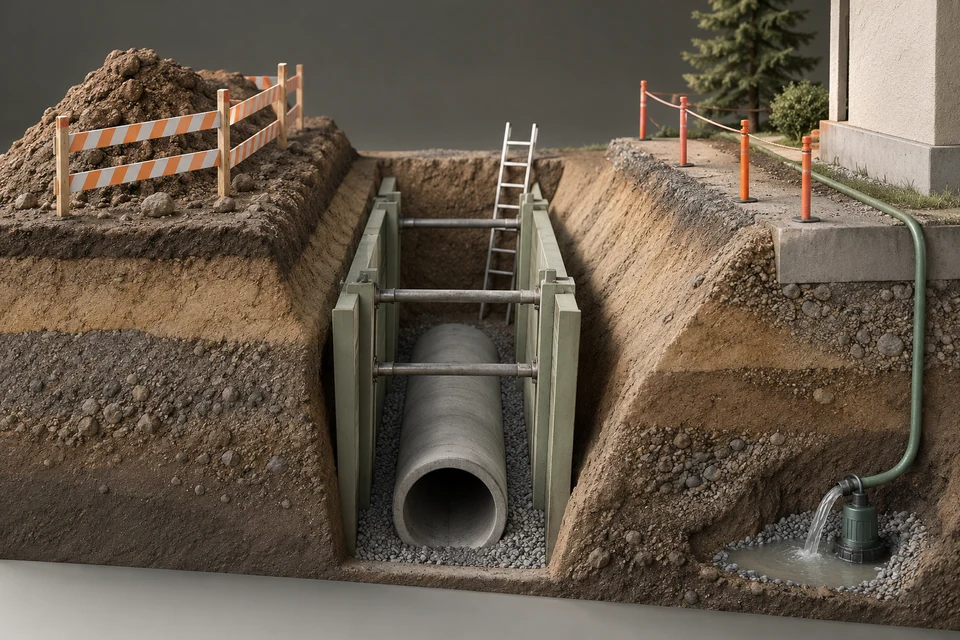
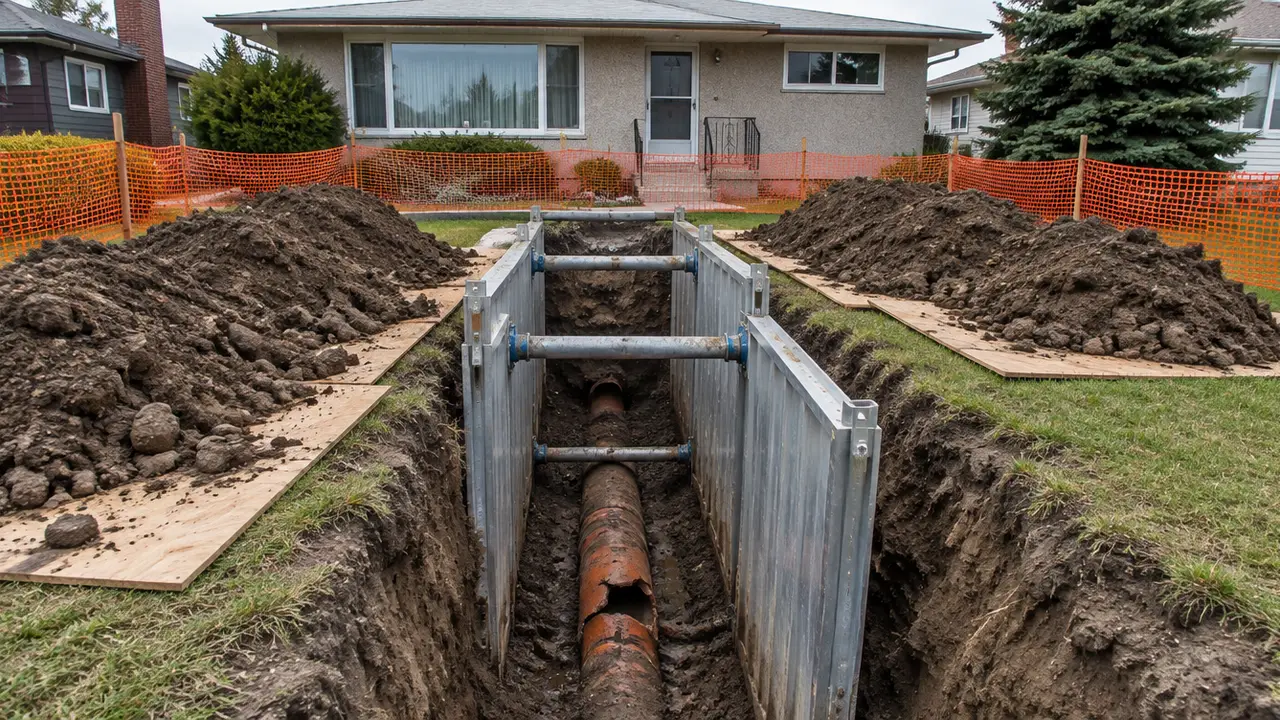
An open sewer trench on a Calgary lot is often deeper than an adult is tall, with loose spoil beside it and heavy equipment moving around it. It is the one part of the job where household routines have to bend to the site, not the other way round.
- Stay outside the fencing while machines run. Operators cannot see everything around a swinging excavator.
- Keep pets indoors or away. Dogs are drawn to fresh soil and open pipe, and a gap under temporary fencing is easy to find.
- Walk the site each evening with the crew lead: fencing closed, covers on, no tools or open pipe ends left out.
- Watch the spoil pile. Children climb it; it can slide into the trench, and it is often wet clay.
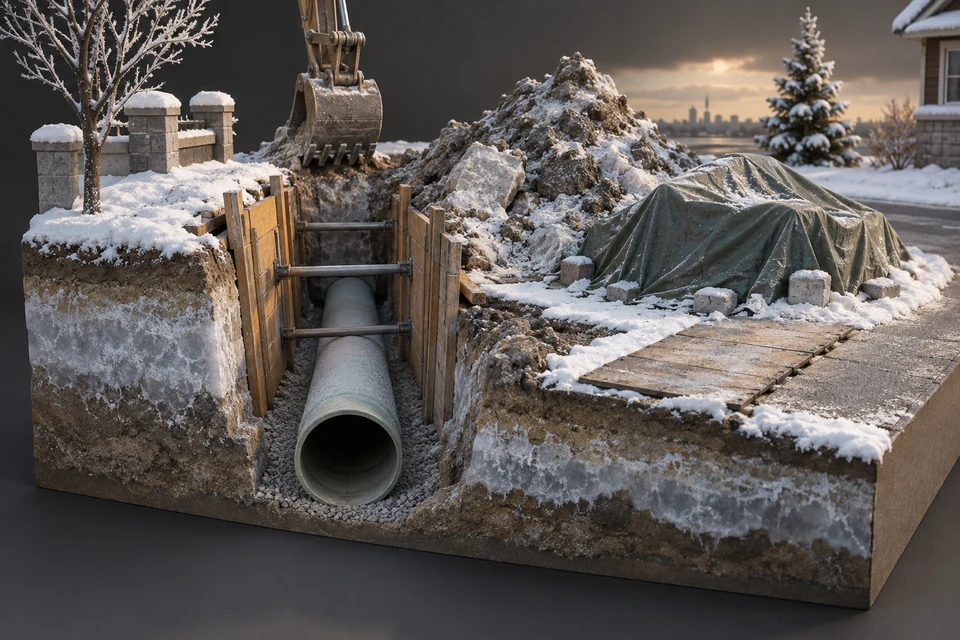
- Winter adds ice around the trench and along the machine path; ask how walkways will be kept safe.
The rules that govern the trench itself, including protection past 1.5 m, are explained in trench safety on a Calgary sewer dig.
05 /How will access, parking and noise change?
Expect the driveway and part of the frontage to belong to the job for its duration. A front-yard trench from the house to the street often crosses the walk or driveway, and the excavator, truck and sometimes a hydrovac need somewhere to park.
| Disruption | What usually happens | What to arrange |
|---|---|---|
| Driveway and garage | Blocked by the trench, spoil or trucks for part or all of the job | Park elsewhere the night before; move anything needed out of the garage |
| Front door and walk | May be crossed by the trench or closed for a day | Agree a safe path and a temporary entrance |
| Deliveries and waste carts | Drivers may not reach the door or the curb spot | Tell couriers; ask where carts can go on collection day |
| Noise | Machine, breaker, saw and compactor noise through working hours | Plan calls and naps elsewhere; ask about start times |
| Internet and phone | Shallow telecom lines near the trench are marked and protected, but can be damaged | Have a mobile backup for a work-from-home day |
| Neighbours | Street parking, noise and sometimes shared access | Talk to them before day one; see neighbours and access |
Noise rules and work hours in Calgary are set by the City; if a neighbour raises a concern, 311 can confirm what applies. Most crews work normal daytime hours and are happy to say when the loudest work will happen.
06 /What should you do if you smell sewer gas or see water in the basement?
Tell the crew immediately, and do not assume a fading smell means the problem has gone. The Canadian Centre for Occupational Health and Safety describes hydrogen sulphide, one of the gases in sewer air, as smelling of rotten eggs, warns that it can dull the sense of smell, and notes that it can collect in low-lying areas and confined spaces. A basement with an open drain is a low-lying area.
- Ask for the pipe to be plugged whenever the open end is not being worked on, inside or outside.
- Ventilate the basement and keep people, especially children, upstairs if the smell is strong.
- Leave the house and call 911 if anyone feels dizzy, short of breath or unwell.
- Stop all water use if water or sewage appears at a floor drain, and tell the crew lead before anything else runs.
- Separate the jobs. Clearing and replacing the line is this site's topic; cleaning a basement after sewage enters it is a different trade, covered at SewageCleanup.ca.
Persistent sewer smells after the job is done are a diagnosis question rather than a construction one; start with the inspection and after-video, then ask the contractor to check the connections and any cleanout caps.
07 /What should you watch for in the weeks after the job?
The first weeks show whether the new line and the restored yard are behaving. Most problems that appear early are small and are easiest to fix while the contractor still has the job fresh.
- Drains that are slower than before, or gurgling from a basement fixture when upstairs water runs.
- Water standing in the floor drain or around an exterior cleanout.
- A dip forming along the trench line, especially after rain or the spring melt.
- Cracks opening along the edges of new concrete over the trench.
- Cleanout caps loose, damaged by a mower or buried by topsoil.
Keep the after-video, permit and sketch together as described in keeping sewer replacement records, and check the settlement plan in backfill and restoration. If you are still planning, request quotes and ask each company to state its no-drain windows in writing.
FAQQuestions people ask
Can I shower on the day my sewer line is replaced?
Before or after the no-drain window, yes. During it, no water should go down any drain. Shower the evening before or early, and ask the crew lead when the window starts and ends.
Do I need a portable toilet during a sewer replacement?
For a short window most households manage without one. For a long lining day, a large household or someone who cannot leave home, ask whether the contractor supplies one or arrange it yourself.
Will my furnace or water softener drain while the sewer is disconnected?
They can. High-efficiency furnaces produce condensate and softeners drain when they regenerate. Ask the crew whether to pause the softener and how they will handle small continuous flows during the window.
Is it safe for children to be home while the trench is open?
Yes, if they stay inside or well away from the fenced work zone. The trench, spoil pile and moving equipment are the hazards; check the site is secured each evening.
What happens if someone flushes while the sewer pipe is cut?
The water spills into the trench or backs up to the lowest drain in the house, usually the basement floor drain. Tell the crew straight away and stop all water use.
Can I work from home while the crew is digging?
Usually, with some planning. Expect machine noise through working hours, and keep a mobile data backup in case a shallow telecom line is disturbed.
NETWORKGo deeper across the HAUSE Sewer network
Is sewer backup dangerous? Health risks, what it smells like and what it looks like
Is sewer backup dangerous? How sewage can make you sick, what sewer backup smells and looks like, when the smell is harmful, and who should stay away.
DrainAugering.caSnaking a drain from the roof vent: when it helps and when it does not
Can you snake a drain from the roof vent? When the vent stack is the right access, clearing a blocked or frost-closed vent, and the roof safety that comes first.
PipeCleaning.caHow to clean the pipes under a kitchen or bathroom sink
How to clean the pipes under a sink: remove and scrub the P-trap, clear the trap arm, fix a slow bathroom stopper, and reassemble without leaks, step by step.