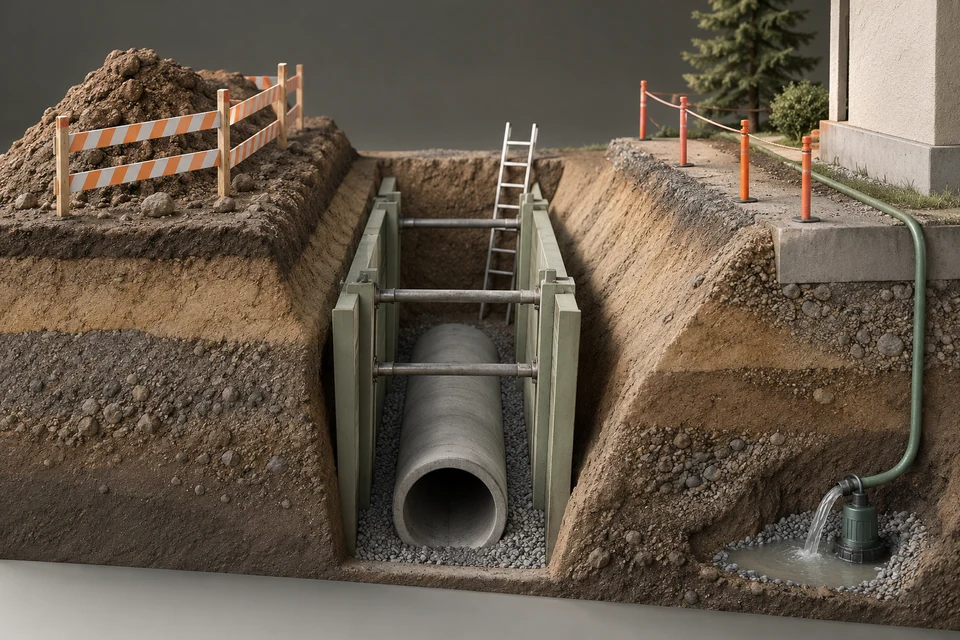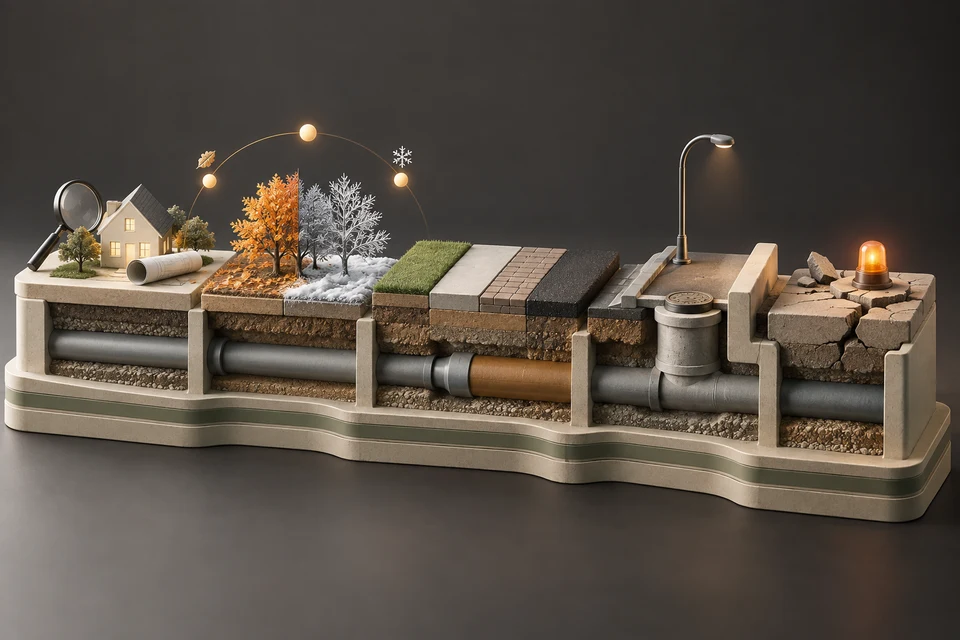
Sewer lines are replaced in Calgary winters, but the frost layer adds a day or two of breaking or thawing, frozen spoil cannot go back as compacted backfill, and surfaces are usually restored temporarily until spring. Frozen walls are not a legal substitute for trench protection. If a failing line can be kept flowing safely, many owners clear it, camera it and schedule the dig after the thaw.
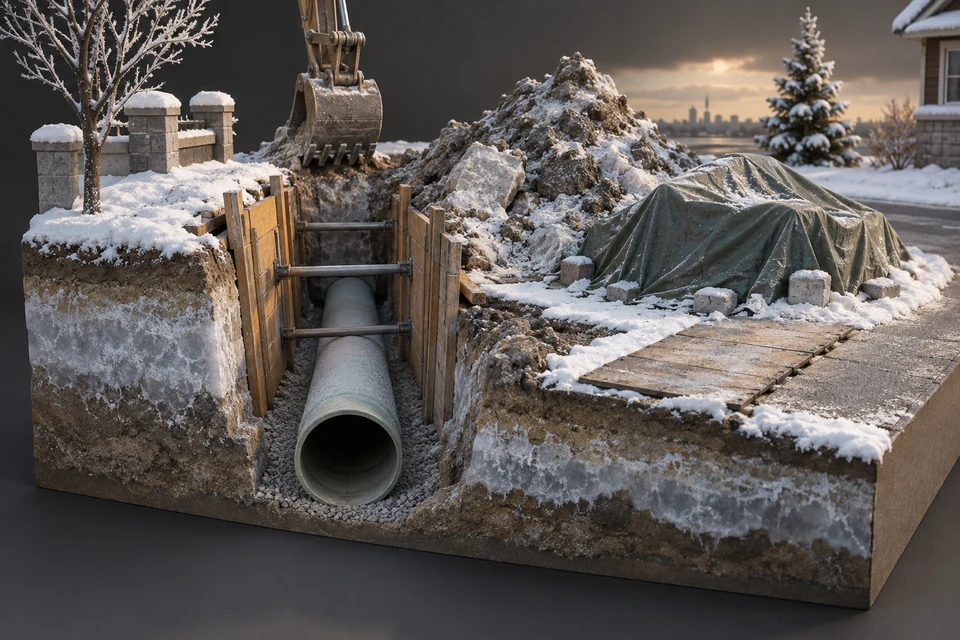
- Frost adds time at the top of the trench: it has to be ripped, broken or thawed before normal digging starts.
- Alberta's OHS Code bars using natural freezing of the soil in place of a protective structure.
- Frozen spoil is lumpy and cannot be compacted properly, so winter jobs often import thawed or granular backfill.
- The City's excavation permit page says winter work may need temporary repairs, with the permit holder returning for final repairs when conditions allow.
- Chinook thaws can soften trench walls and turn a stable winter trench into a wet one overnight.
01 /Can a sewer line be replaced in a Calgary winter?
Yes. Contractors replace laterals through Calgary winters, especially when a line has collapsed or a backup cannot be cleared. What changes is the top of the job and the end of it: breaking into frozen ground takes longer, and finishing the surface properly usually waits for spring. The pipe itself sits below the frost, where the digging and laying are much the same as in July.
The Replacement Timeline Planner adds one to two days of frost time to the on-site step for a winter job and notes that winter restoration is often temporary until spring. Those are planning ranges; a deep cold snap or a stubborn layer of frozen fill can add more.
02 /What does frost add on site?
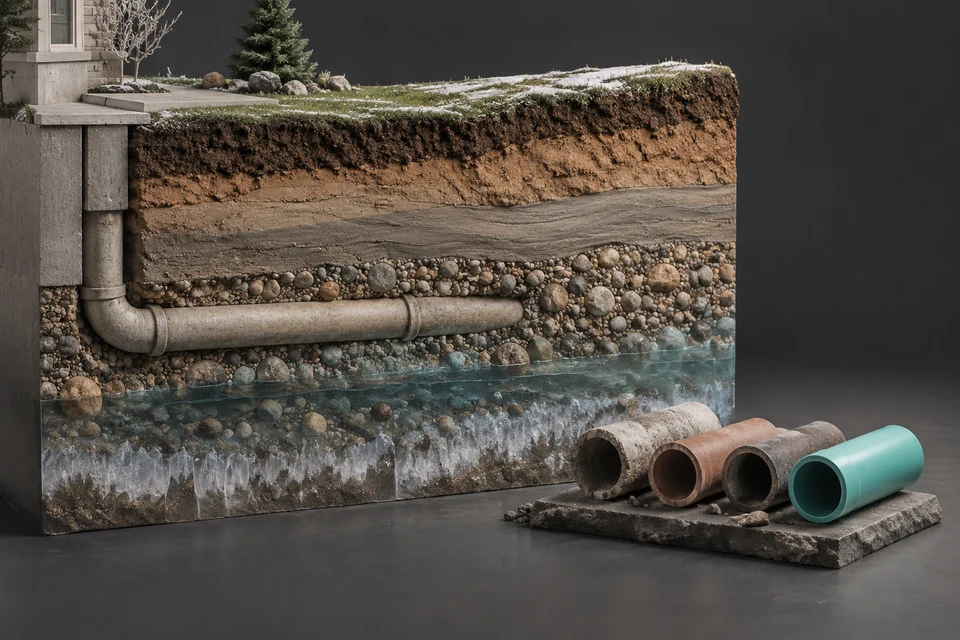
Frost turns the top of the trench into a slab that a normal bucket skids across. How thick it is varies with the winter, the snow cover and the surface: snow insulates a lawn, while a plowed driveway or shovelled walk can freeze much deeper. Crews deal with it in one of three ways, often combined.
| Method | How it works | Trade-offs |
|---|---|---|
| Frost ripper or ripper tooth | A single hardened tooth on the excavator breaks the frozen layer into chunks | Fast in moderate frost; hard on equipment; leaves large frozen lumps |
| Hydraulic breaker | A hammer on the excavator arm breaks the frost like concrete | Works in deep frost; noisy; vibration near foundations and utilities |
| Ground thawing | Insulated blankets with heated fluid, or tented heaters, thaw the frost over hours or a day | Gentle and quieter; needs lead time and fuel; the soil below becomes wet and soft |
| Hydrovac with heated water | Heated water and vacuum expose utilities and loosen frozen soil | Ideal for hand-expose zones; adds a truck and disposal of the slurry |
Locates add their own winter friction. Paint on snow melts or blows away and flags get buried, so marks may need to be re-established as work proceeds, which Alberta's OHS Code requires whenever marks are moved or destroyed. Hand exposure within the one-metre zone either side of a mark is slow through frozen ground, which is why hydrovac is common on winter sewer jobs.
03 /Does frozen ground make trench walls safer?
No, and Alberta law says so directly. Section 443 of the OHS Code states that a person must not use natural freezing of the soil as an alternative, or a partial alternative, to a temporary protective structure, or to stabilize the soil in an excavation. A frozen crust can bridge over unfrozen, wetter soil below, and a chinook can thaw it within hours.
Engineered artificial freezing or grouting is permitted, but only when a professional engineer designs and specifies it, which is not something a residential lateral normally involves. The rest of the Code's excavation rules, and how Calgary soils fit its classes, are in trench safety on a Calgary sewer dig.
04 /Why is backfill harder in winter?
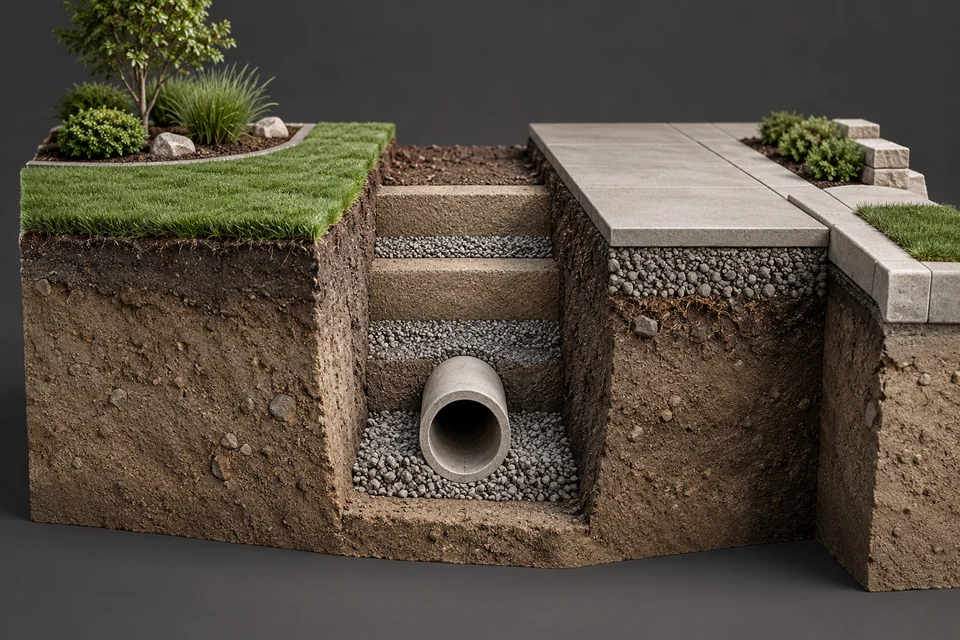
Backfill has to be compacted in layers to keep the trench from settling, and frozen soil does not compact. Excavated clay that sits on the spoil pile overnight freezes into hard lumps with air gaps between them. Put back that way, it settles as the lumps thaw in spring, sometimes by a surprising amount.
- Bedding and the first cover over the pipe should be unfrozen material. Ask what the contractor uses around the pipe in winter, and whether it is kept thawed or brought in fresh.
- Imported granular backfill is commonly used in winter because it drains, compacts at lower moisture and is less prone to freezing into lumps. It adds material and trucking.
- Tarps, insulated blankets or heaters over the spoil pile keep some of the native soil usable, at the cost of fuel and time.
- A planned top-up in spring deals with the settlement that happens anyway. Put it in the contract.
Material for the pipe zone matters for grade, too. Frozen clods under a new pipe create hard points and voids, and the pipe can settle into a belly when they thaw. Backfill and restoration explains the layers and why settlement shows up where it does.
05 /What does winter restoration look like?
Usually temporary. You cannot seed or lay sod on frozen ground, concrete needs protection from freezing while it cures, and permanent asphalt paving is generally left for warmer weather. The City's excavation permit page recognizes this for work in the right-of-way: it says work completed in winter months may require temporary repairs, and that permit holders are responsible for returning to complete final repairs when conditions allow.
| Surface | Winter treatment | Spring follow-up |
|---|---|---|
| Lawn | Backfill mounded slightly; topsoil stockpiled or delivered later | Top up settlement, topsoil, seed or sod |
| Landscaping and beds | Plants heeled in or removed; edging stored | Replant, re-edge, re-mulch after settlement |
| Concrete walk or driveway | Compacted gravel or temporary cover; pour only with cold-weather protection | Form and pour once the trench has settled |
| Paving stones | Stones stacked on site; gravel base left slightly high | Rebuild base and relay after settlement |
| Boulevard, sidewalk or road | Temporary repair under the City permit | Final repair by the permit holder when conditions allow |
Get the spring return in writing: what will be done, by whom, and roughly when. Without it, the settled hollow over your new pipe becomes a negotiation in May.
06 /How does a winter job change your household's days?
The drain is out of service for longer in winter, because each stage takes a little more time and short daylight trims the working day. Plan the household around that before the crew arrives.
- Water use: while the old pipe is cut and the new one is not yet connected, nothing can drain. Ask for the exact window each day, and plan showers, laundry and dishes around it. Living at home during a sewer replacement covers the rest of the household plan.
- Heat and doors: crews working at the foundation or inside the basement may need a door open or a heater running. Protect the thermostat area and any plumbing near an exterior wall from drafts.
- Snow storage: the spoil pile, the machine and the trench take space where you normally pile snow. Agree where snow from the driveway and walk will go until restoration.
- Pipe handling: plastic pipe is less forgiving of knocks in deep cold. Pipe stored inside a heated space or brought to site on the day tends to be handled more gently than pipe left on a frozen lawn overnight.
- Night-time protection: an open winter trench is covered or fenced overnight, and heaters or blankets may run on it. Ask what will run unattended and how it is secured.
07 /Should you replace now or wait for spring?
That depends on whether the line can be kept working safely until the ground thaws. The question to settle with footage, not symptoms, is whether the pipe is still passable and holding its shape.
| Situation | Usual approach |
|---|---|
| Collapse, or the camera cannot pass | Replace now; the line cannot be relied on |
| Repeated backups within weeks despite cleaning | Replace now, or line it if it qualifies |
| Roots or offsets but the line clears and flows | Clean, camera to confirm, schedule for spring |
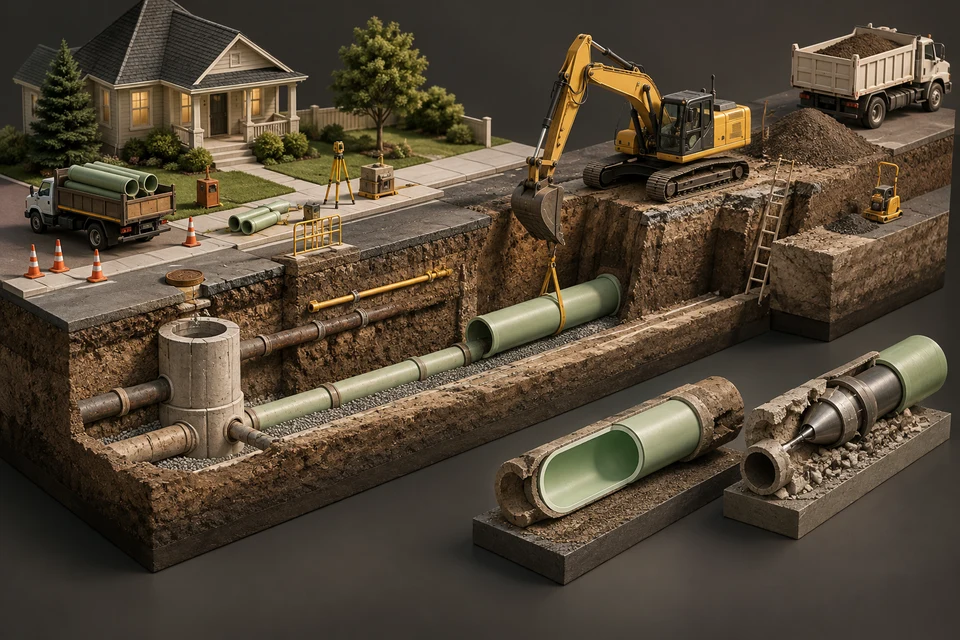
| A trenchless method suits the line | Often feasible in winter, since little ground is opened |
| Replacement planned for renovation or sale | Spring; plan permits and quotes over winter |
Winter is also a good time to do the paperwork for a spring job: footage, scope, quotes, permit and a locate request timed for the thaw. CalgarySewers.com covers keeping a struggling line going through the cold months, and the Permit & Locate Checklist lets you finish most of the list before the ground is soft.
FAQQuestions people ask
Is it more expensive to replace a sewer line in winter in Calgary?
Usually. Frost breaking or thawing, imported backfill, heating and a second visit for final restoration all add time and material. CalgarySewerReplacement.com covers how much.
Can trenchless lining be done in winter?
Often, because lining works from a cleanout or a small pit and does not open the whole yard. The crew still has to manage curing and access in the cold.
Will my winter trench sink in spring?
Some settlement is common, especially where frozen soil went back into the trench. A planned spring top-up and delayed concrete work deal with it.
Do locates work when there is snow on the ground?
Yes, but marks on snow can be lost. Expect flags or stakes, and expect marks to be re-established as work moves through the site.
Can a frozen line be mistaken for a broken one?
Yes. Ice in a shallow section can block flow like a collapse. A camera run after thawing tells the difference before anyone digs.
NETWORKGo deeper across the HAUSE Sewer network
Sewer line repair cost: what a spot repair should cost
Sewer line repair cost in Canada for 2026: spot repair and sectional liner planning ranges in CAD, what drives the price, and when a repair beats full replacement.
PipeCleaning.caCleaning the main stack and plumbing vent
Main stack and vent cleaning: gurgling and slow drains, roof vent blockages from frost and debris, stack descaling, and roof access safety.
SewerInspector.caHow long a sewer scope takes, from booking to the report
How long a sewer scope inspection takes: typical time on site, what adds time, how far ahead to book, and when to expect the video and the written report.