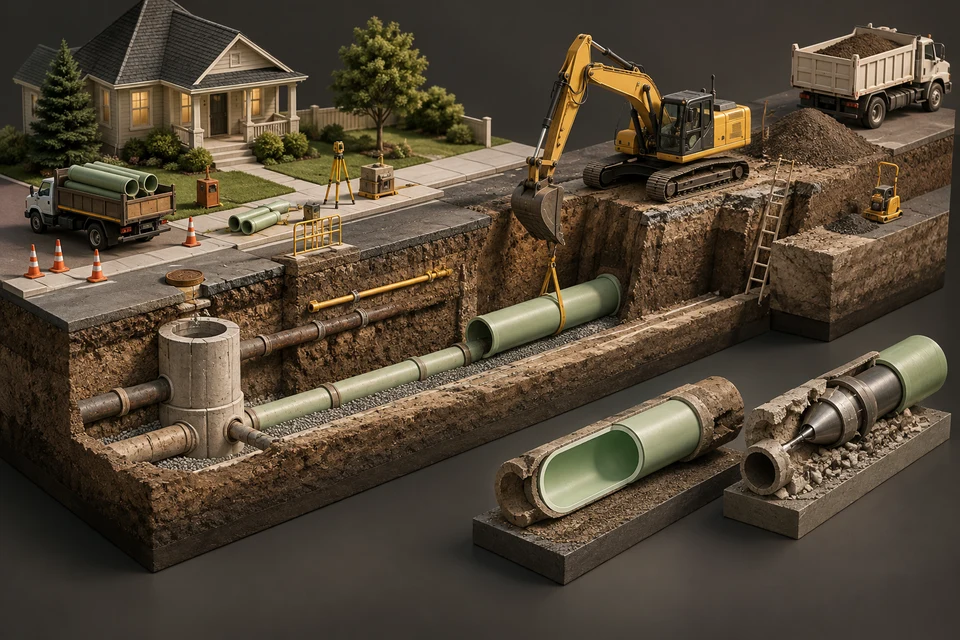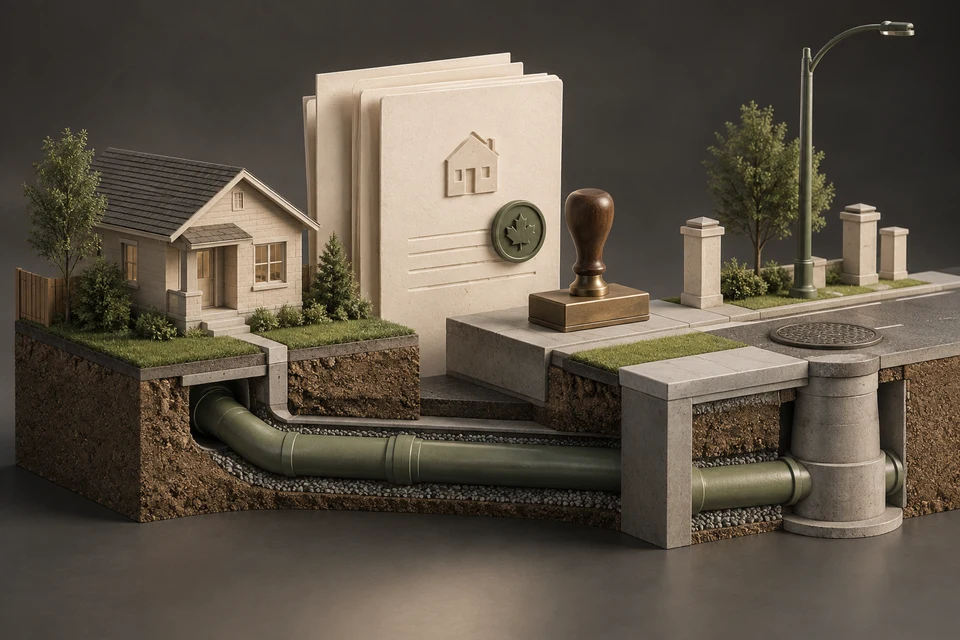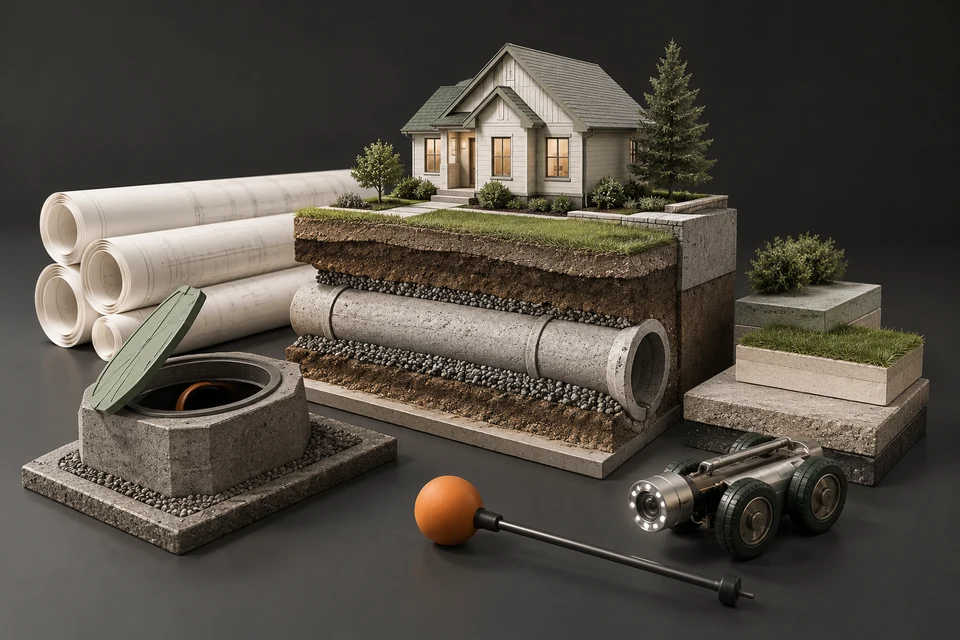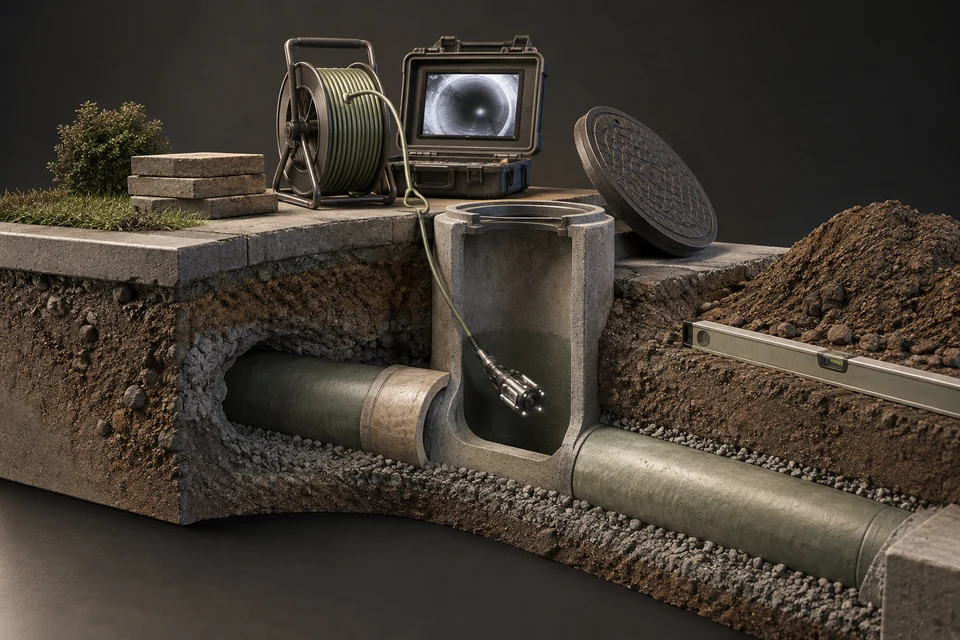
A Calgary sewer replacement is inspected under its plumbing permit while the new pipe, joints, bedding, grade and connections are still visible. The permit holder books the inspection through 311 or a VISTA account, by 2 p.m. for the next day. Alongside the City inspection, insist on a recorded after-video from the house to the City section, and compare it with the before-video yourself. Backfill waits until the work passes.
- The City inspection is booked by the permit holder through 311 or VISTA; next-day requests must be in by 2 p.m.
- What cannot be seen cannot be inspected: backfill before inspection can mean digging the pipe up again.
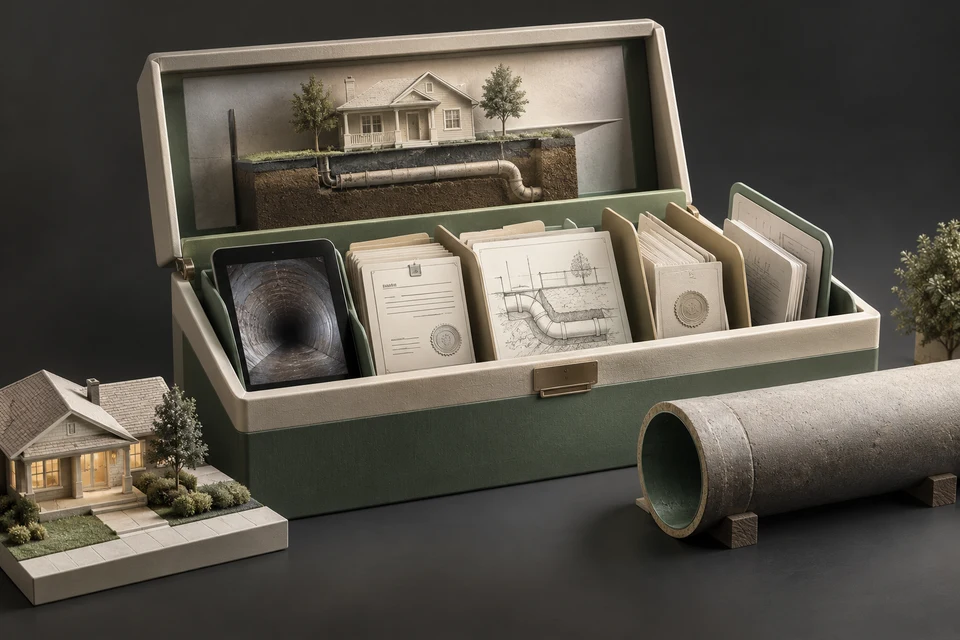
- The after-video is your own inspection record and should run the full length to the City section.
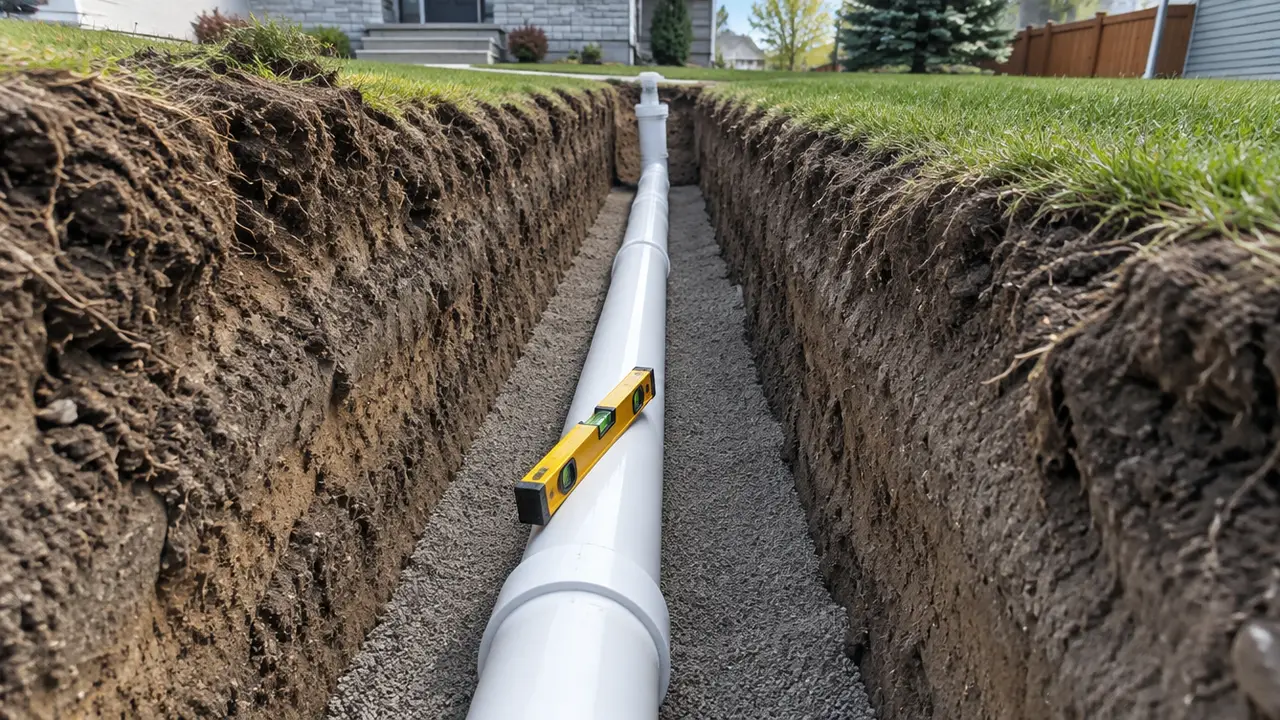
- A belly, a gap at a joint or a misaligned connection is far cheaper to fix with the trench open.
- Work in the City right-of-way has its own inspection under the excavation permit, including backfill compaction.
01 /Who inspects a sewer replacement in Calgary?
Up to three sets of eyes check a Calgary sewer replacement, each for a different reason. The City's plumbing inspector checks the work against the permit and the plumbing code. The camera operator records the finished line, which is the only view anyone will have of it once it is buried. And if any work touched the City road right-of-way, the City's roads group inspects that site under the excavation permit.
| Inspection | Who | What it covers | When |
|---|---|---|---|
| Plumbing permit inspection | City of Calgary safety codes officer | Pipe, joints, bedding, grade, cleanouts, connections as the code requires | After laying, before backfill |
| After-video | The contractor's camera operator | The full new line, both connections and the City section beyond | Before backfill and again after if requested |
| Excavation permit inspection | City roads inspection | Restoration of the right-of-way, including backfill compaction where selected | After the work, before the permit is invoiced |
| Your own walk-through | You | Site condition, surfaces, the as-built sketch and paperwork | At completion and after settlement |
02 /How do you book a plumbing inspection in Calgary?
The permit holder books it, by calling 311 or through their online VISTA account. The City's plumbing and gas permit page says requests for an inspection the following day must be made by 2 p.m., and that you can call 311 on the morning of the inspection to find out whether it will be in the morning or the afternoon. On a homeowner permit, the homeowner books; on a contractor's permit, the contractor does.
- Plan the trench around the slot. If the pipe will be laid by early afternoon, a request by 2 p.m. can put the inspection on the next day. Laid late in the day, it may be the day after.
- Keep it safe to view. The inspector needs to see the work, which on a deep trench may mean viewing from the edge or from inside a protected trench box. An unprotected deep trench is not a place for anyone, inspector included.
- Have the paperwork on site. Permit number, the scope, the pipe and fitting specifications, and the camera footage if a camera run is part of the check.
- Ask in advance what they want exposed. The City's plumbing safety codes officers answer questions through 311; ask through the permit holder before the day.
03 /What does an inspector look at on a buried sewer?
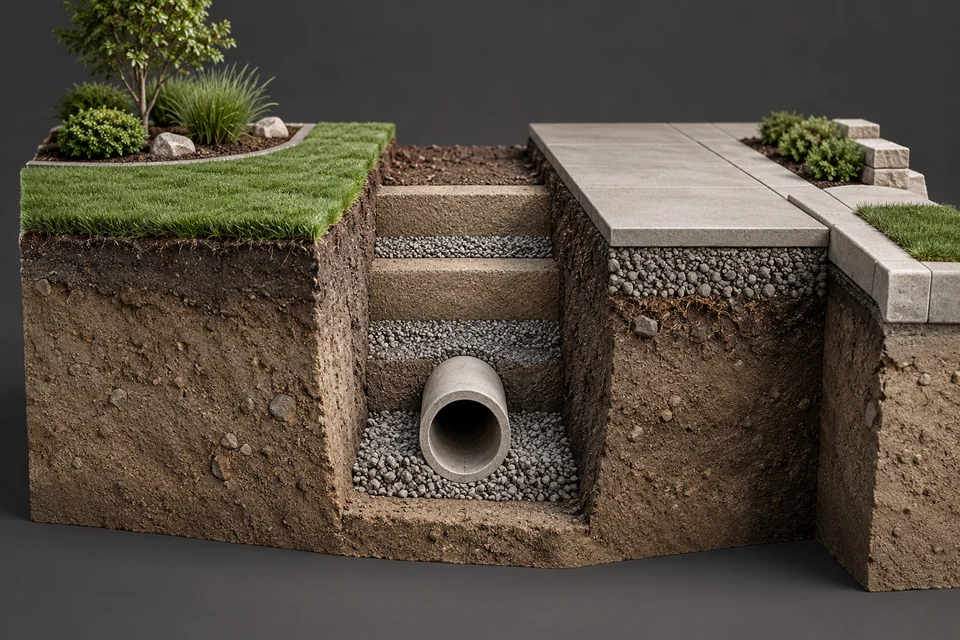
On a buried building sewer, the inspection is about whether the pipe will carry waste reliably for decades: the right material, properly supported, joined tightly and falling steadily toward the street. The specific checks and any test belong to the inspector and the code edition in force, so treat this list as what to have ready rather than a rulebook.
| Item | What good looks like | Why it matters |
|---|---|---|
| Pipe and fittings | Material and markings suitable for a building sewer; no damaged lengths | Wrong or damaged pipe fails early |
| Bedding and support | Continuous support under the barrel, not resting on bells or rocks | Point loads crack pipe and create dips |
| Grade | A steady fall toward the main, with no reverse slope or dip | Bellies hold water and solids |
| Joints | Fully seated gaskets or properly made couplings | Gaps admit roots and soil |
| Connections | Transition couplings suited to the materials at the building drain and the property line | Mismatched joints leak or shear |
| Cleanouts | In the positions the plan shows, capped, and reachable | Future access for cameras and cleaning |
| Cover and depth | Adequate cover for frost and loads | Shallow sections freeze or crack under traffic |
04 /What should you check in the after-video?
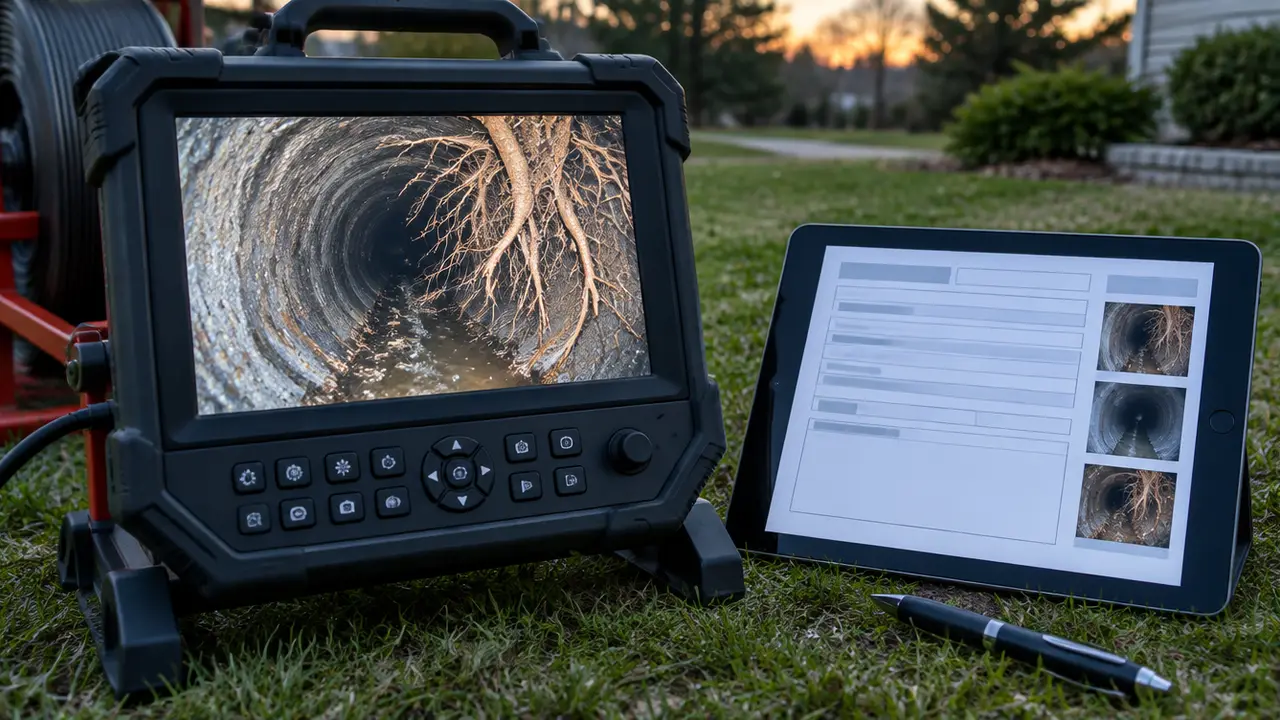
The after-video is the one inspection you can repeat forever, so check it before the trench closes. Ask for it while the crew is still on site, and watch it next to the before-video.
- Length: the run should start at the house access point and reach the City section, ideally the main. A video that stops at the property line leaves the joint unrecorded.
- Water pooling: after a flush, standing water that covers much of the pipe bottom over a stretch suggests a belly.
- Joints: each joint should appear as a thin ring, not a gap, lip or step.
- Connections: the join to the building drain and to the City section should be aligned, with no ledge that catches paper.
- Debris: bedding stones, soil or cut pipe inside the new line should be flushed out before handover.
- Counter and labels: the distance counter visible throughout, and the file labelled with the address and date.
05 /What happens if the work fails inspection?
A failed item is corrected and re-inspected, and the trench stays open until it passes. That is the system working as intended: a sag, a poorly seated joint or a missing cleanout costs a few hours to fix now and a new excavation to fix later.
- Ask what failed, in writing. The permit holder receives the result; ask for a copy or a clear description.
- Expect the trench to be secured another night. Fencing or covers, and a revised plan for household water use.
- Confirm the re-inspection date and that backfill will wait for it.
- Keep the record. A correction that passed re-inspection is fine to disclose later; an unexplained second trench is harder to explain.
For right-of-way work under a City excavation permit, the City's page says each site is inspected before the permit is invoiced, that deficiencies must be corrected and re-inspected, and that the permit holder stays responsible for maintaining the trench backfill for a two-year period. See working on the City side.
06 /How do inspections differ for trenchless and spot repairs?
The less pipe you can see, the more the inspection leans on video. With open cut, the whole new line is visible in the trench. With lining or bursting, almost none of it is, so the recorded camera run carries most of the weight, together with what can be seen at the access points and pits.
| Method | Visible at inspection | What the video must show |
|---|---|---|
| Open cut | The full new pipe, bedding, joints and both connections | Grade and joints after a flush; the City connection |
| Lining | The liner ends at the access point | A continuous liner with no wrinkles or gaps, and every reinstated connection opened fully |
| Pipe bursting | The new pipe and connections at each pit | A continuous new pipe with no deflection at pits |
| Spot repair | The new section and both couplings | The repair and the pipe either side of it |
Where the City's plumbing permit applies, ask the inspector through the permit holder how a trenchless job will be verified, and plan the camera run accordingly.
07 /Where do inspections fit in the overall timeline?
Inspection is a short step with an outsized effect on the schedule, because it sits between laying and backfill and depends on booking windows. The Replacement Timeline Planner lists it as “book with the City or inspector” for that reason, and the Permit & Locate Checklist has separate items for booking the inspection and receiving the after-video with the warranty. After it passes, backfill and restoration begins, and the inspection result goes into your house records.
FAQQuestions people ask
Does a sewer line replacement need a City inspection in Calgary?
Work done under a plumbing permit is inspected by the City. Replacing sewer lines in or around the home is listed by the City as permit work.
Who books the inspection?
The permit holder: the contractor on a contractor's permit, or the homeowner on a homeowner permit. Book through 311 or VISTA; next-day requests must be in by 2 p.m.
Can the crew backfill before the inspector comes?
Not if the work needs to be inspected. Buried work cannot be seen, and exposing it later means digging again.
Is the camera video part of the inspection?
Ask the inspector what they require. Either way, the recorded after-video is your best record of the finished line and should be part of the handover.
What is the most common defect to catch before backfill?
A belly, where the pipe dips and holds water. It is visible on camera after a flush and on a grade check, and easy to correct while the trench is open.
NETWORKGo deeper across the HAUSE Sewer network
Is hydro jetting safe for PVC and ABS drain pipe?
Can hydro jetting damage PVC or ABS pipe? What plastic lines tolerate, where they are weak (joints, fittings, bellies, heat) and how to jet them safely.
SewerInspector.caSewer scope inspections in Edmonton: what to expect and who to call
Sewer scope and sewer line inspection in Edmonton: what mature and newer neighbourhoods show on camera, cold and clay soils, elms, EPCOR and 311 checks.
SewerRoots.caPermanent fixes for roots in sewer lines
Permanent fixes for roots in sewer lines: CIPP lining, sectional point repairs, pipe bursting and open-cut replacement compared by cost, lifespan and fit.