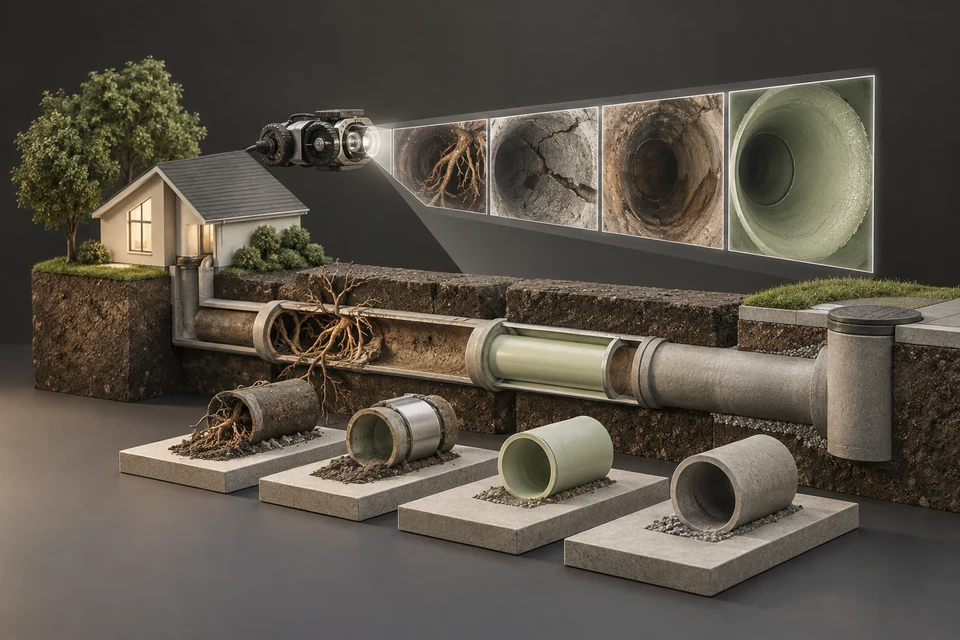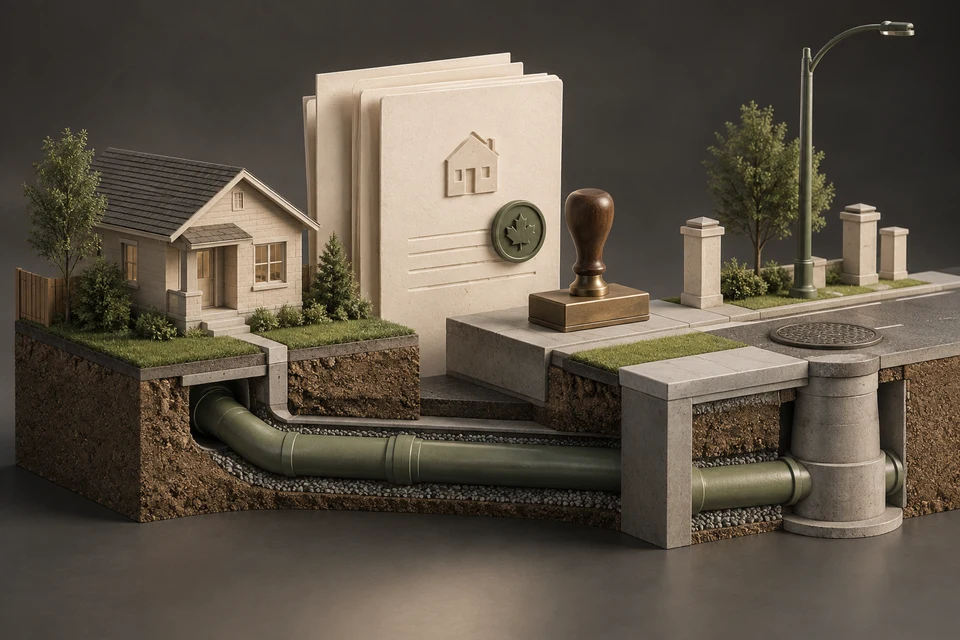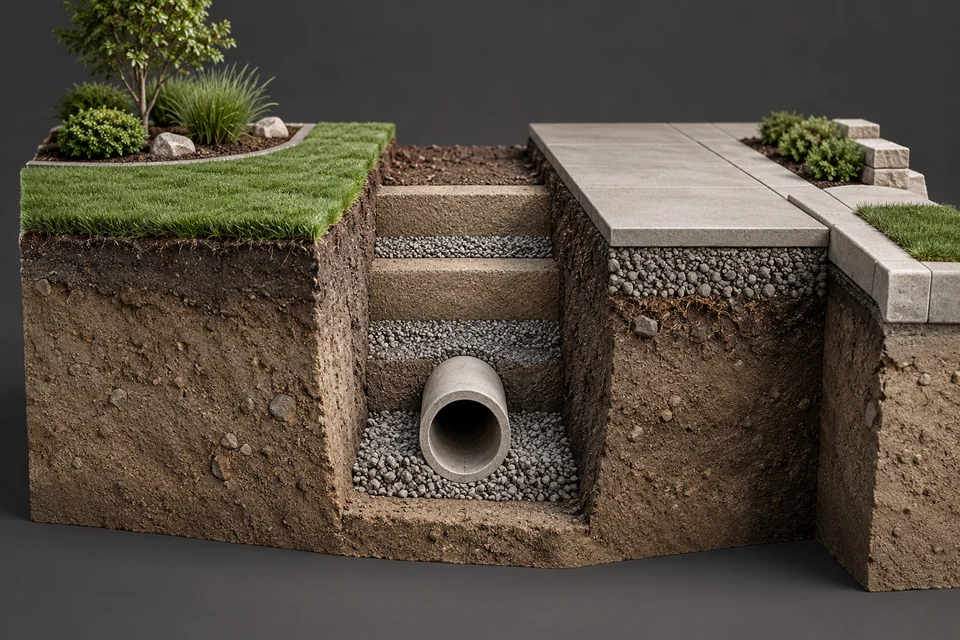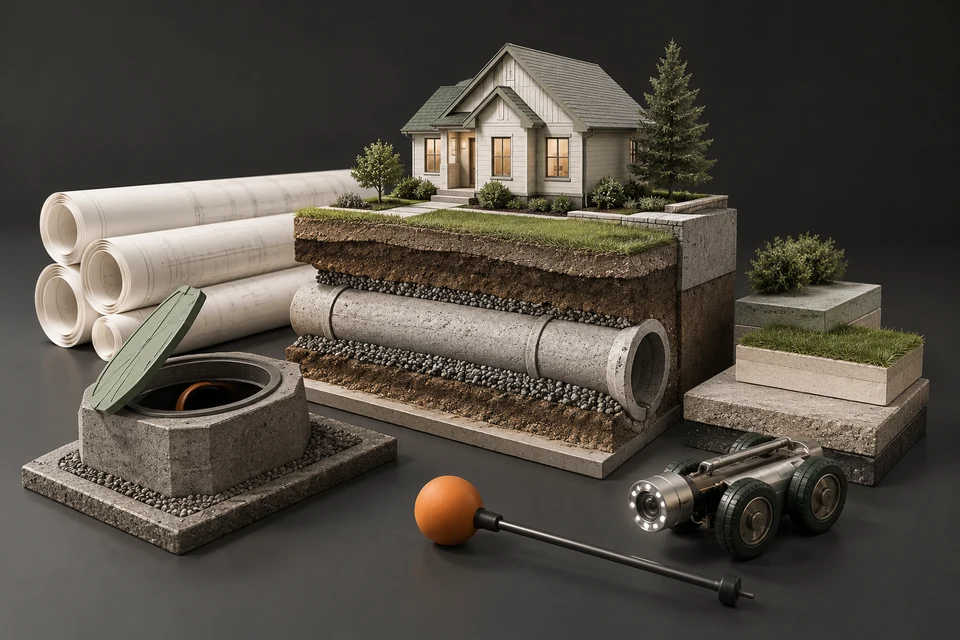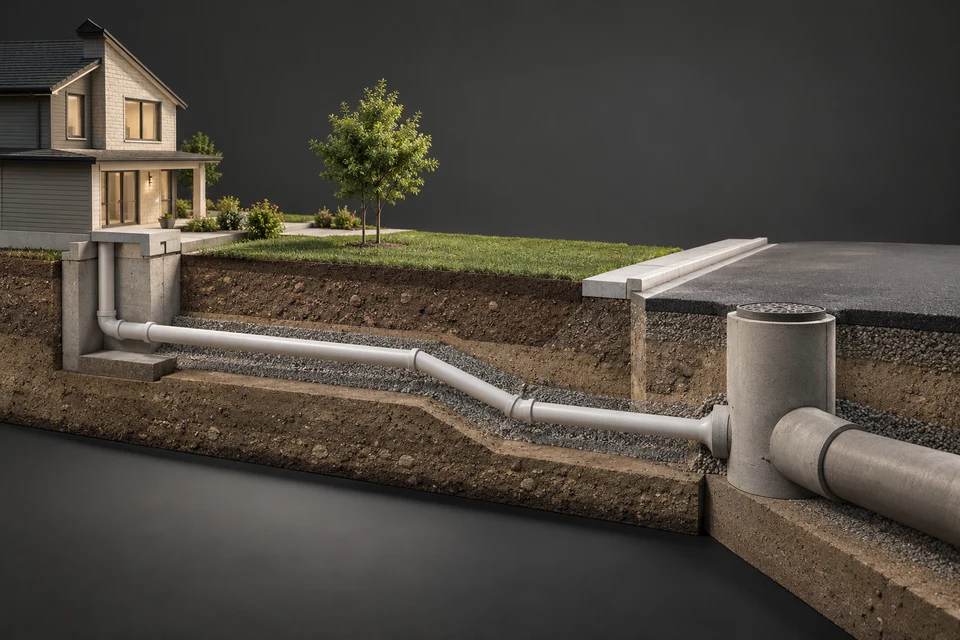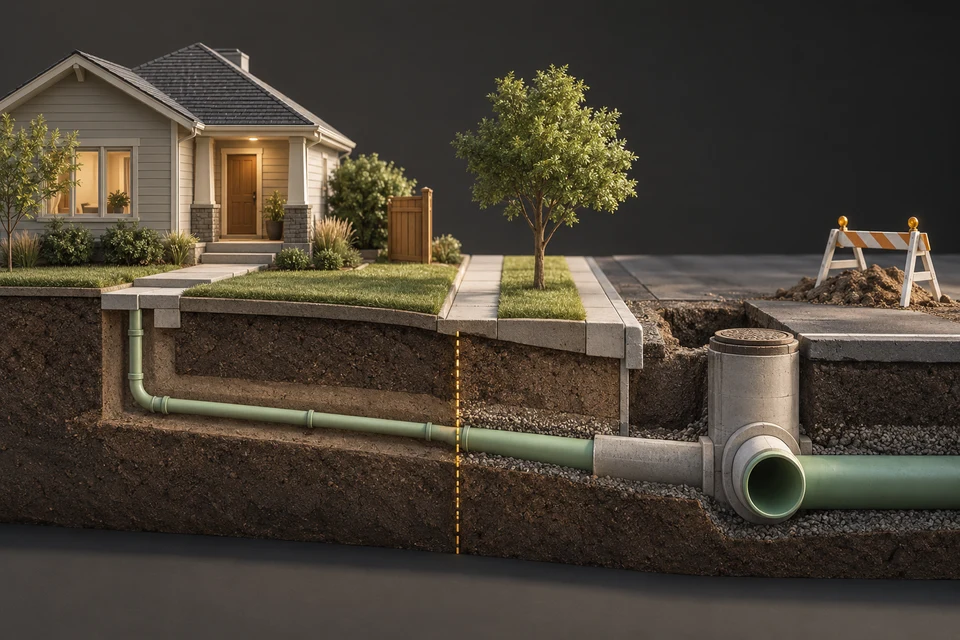
The City of Calgary's published position is that it owns and maintains the sanitary service pipe from the main to the property line, and the homeowner owns and maintains it from the property line to the house. If your camera shows a defect on the City section, report it to 311 with the footage and distances; the City determines responsibility. If a private replacement must dig into the boulevard, City right-of-way permits apply.
- The City's dataset description splits the sanitary service pipe at the property line: City from the main to the line, homeowner from the line to the house.
- For a backup, the City says its crew runs a steel snake to the main to determine whether the blockage is on private or public property.
- The property line is often behind the sidewalk; the boulevard strip is City road right-of-way, and digging there needs an excavation permit.
- Service connections in the City right-of-way must be installed by a contractor on the City's indemnified list.
- The City's Sanitary Lateral Lining Program relines existing service pipes; its records show those as CIPP with the relining date.
01 /Who is responsible for which part of a Calgary sewer line?
The City of Calgary describes the sanitary service pipe as two sections. In the description attached to its Public Sanitary Service Lines dataset, the section “from the sanitary main to the property line” is “owned and maintained by The City of Calgary”, and the section “from the property line to your house” is “owned and maintained by the homeowner.” The same description notes that the material on private property can be different and could have been installed at a different time. That is the City's published position; for any specific address, 311 is the place to confirm it.
The practical trap is the location of the property line. On many Calgary streets the lot line sits a short distance behind the sidewalk, and the grass strip between the sidewalk and the curb is City road right-of-way. A pipe that looks like it is still in your front yard may already be on the City's side. Measure it, do not assume it.
02 /Will the City fix my sewer line?
The City fixes its own section when it confirms the problem is there, and it does not repair the private section. For a backup, the City's sewage backup page says the 311 agent asks questions to determine whether you need a plumber or whether the issue might be City infrastructure, and that a City crew runs a steel snake to the sewer main to determine whether the blockage is on private or public property. If the blockage is on private property, the City advises the customer to call a plumber.
A structural defect found on camera, such as a broken joint or a collapse, is a different situation from a blockage. It is still reported through 311, and it helps enormously to show exactly where it is. The City makes the final determination; nothing on this page is a promise of what it will decide or when.
- Get the footage right
A recorded run that reaches the main, with the counter visible, and a written log of the defect's distance from the access point.
- Place the defect in the yard
A sonde mark on the surface above it, with a depth reading.
- Place the property line
Measure the distance from the defect mark to the property line using survey pins or a Real Property Report.
- Call 311
Describe the defect, its distance past the property line and how you can share the video. Ask for the service request number.
- Hold the private dig
If the defect is at or past the line, wait for the City's assessment before your contractor digs anywhere near it.
03 /What happens when a private replacement has to reach the boulevard?
Any digging into City road right-of-way needs a City excavation permit. The City's excavation permit page says the permit is required to break or dig into the surface of a City road right-of-way, and lists what that includes: streets, sidewalks, curbs and gutters, driveway crossings, lanes and walkways, the area between the property line and the sidewalk, and the area between the sidewalk and the curb.
| Item | What the page says |
|---|---|
| How to apply | Online through a City of Calgary myID business account; up to two weeks before the work start date |
| Processing | Up to two business days; up to 10 business days if the work affects pavement laid in the last two years |
| Validity | Two weeks from the approval date, with extensions by request |
| Closing out | Return the permit within 14 days after it expires, with a sketch and measurements of every cut |
| Inspection | Each site is inspected before the permit is invoiced; deficiencies must be corrected |
| Backfill responsibility | The permit holder is responsible for maintaining the trench backfill for a two-year period |
| Winter work | May require temporary repairs; the permit holder returns to complete final repairs when conditions allow |
Two other City rules often come with a boulevard dig. New water, sanitary or storm service connections in City rights-of-way must be installed by a contractor on the City's indemnified contractor list under its Master Indemnification Agreement. And if the work comes within six metres of a public tree, which includes many boulevard trees, the City requires a tree protection plan approved by Parks Urban Forestry. A street use permit applies if a bin, equipment or materials will occupy the sidewalk, boulevard, lane or street. For a brand-new connection on an infill or rebuild, see running a new sewer line to the street.
04 /How does the City's lateral lining program affect your job?
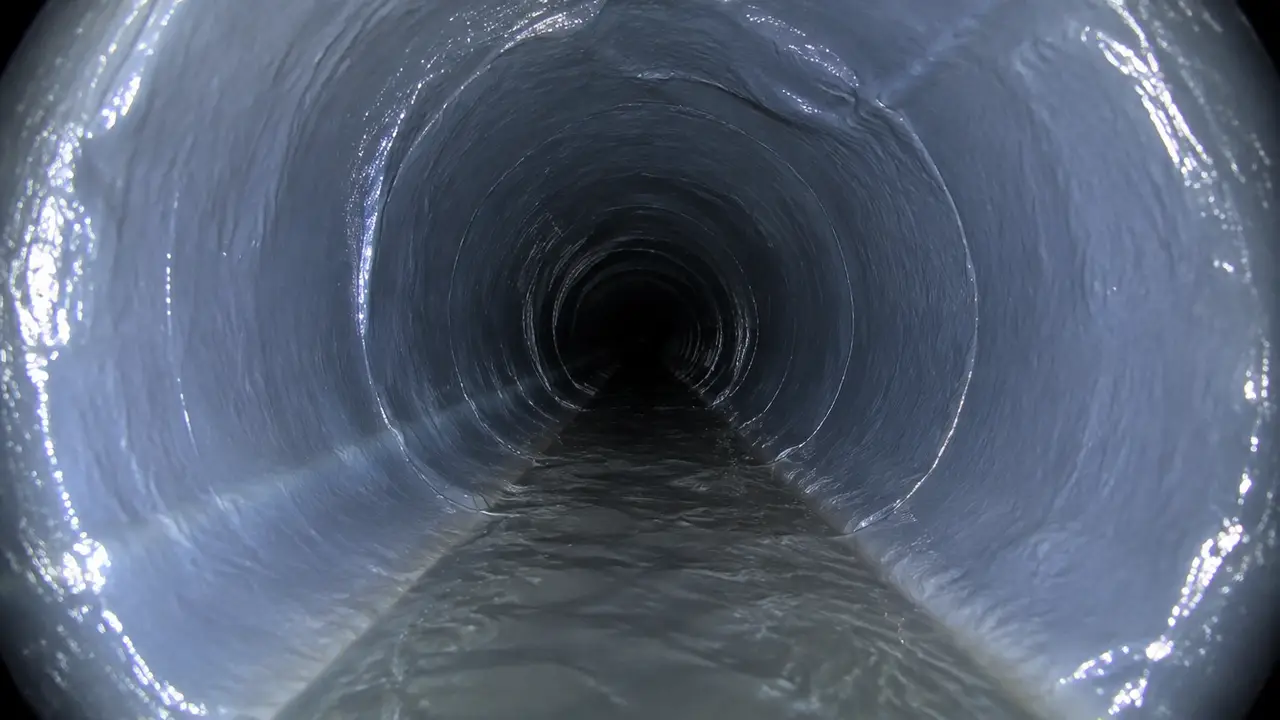
The City runs a Sanitary Lateral Lining Program that installs liners inside existing sanitary service pipes to extend their life. Its program page tells residents they will be notified in person about 30 minutes before work begins if their connection must be taken out of service, that the connection is out of service for approximately three hours while the liner is installed, and that they should not run taps, showers, toilets, washing machines or dishwashers during that time. It also suggests pouring about four litres of water into floor drains beforehand to help reduce fumes.
The City's own records show the program's footprint. In a HAUSE analysis of the Public Sanitary Service Lines dataset, lines coded CIPP jump from fewer than 50 per decade before 2010 to 832 in the 2010s and 3,153 in the 2020s; for CIPP lines, the record date is usually the relining date, so these are older City sections renewed in place. In Highwood about 22 percent of City-side records are CIPP, and in Glendale and University Heights about 20 percent. Those figures describe only the City-owned section; the private side on those lots may still be original pipe.
- Check before you scope. If the City side of your line is already relined, your contractor needs to plan the property-line connection to a lined pipe, not to the original clay or cast iron.
- Ask about timing. If your block is scheduled for City lining, ask 311 whether your private work should come before or after, so a new connection is not disturbed.
- Keep your side clear. Roots or debris coming from a failing private section can still reach a newly lined City section.
CalgarySewers.ca covers how the City's system and records work in more depth; this page is about how that affects a replacement you are planning.
05 /What if the City's work and yours need to happen together?
Sometimes both sections are failing, or the joint at the property line is the defect. There is no standard homeowner process for booking a combined job, so treat it as coordination: the City assesses and schedules its section, your contractor scopes and permits yours, and the two are sequenced so the ground at the line is opened once where practical. Expect the City's timing to lead, and plan your restoration after both sides are complete.
During any City repair, follow the City's instructions. Its sanitary pipe break page asks residents not to flush toilets, shower, or run dishwashers and washing machines during repairs, because water entering the drains might cause sewer water to re-enter the home.
Before committing to a private start date, run your plan through the Replacement Timeline Planner with City-side work set to “yes”; it lengthens the permit step and widens the start-to-finish range. The Permit & Locate Checklist includes the boulevard permission and tree protection items for the same reason.
FAQQuestions people ask
Who is responsible for sewer line repair in Calgary?
The City's published position is that it owns and maintains the section from the main to the property line and the homeowner owns and maintains the section from the property line to the house. Call 311 about a specific case.
Will the City fix my sewer line for free?
The City maintains its own section. If a camera shows a defect past your property line, report it to 311 with the footage; the City decides responsibility. Work on your private section is paid by the owner.
Is the boulevard part of my property?
Usually not. The City's excavation permit page includes the area between the property line and the sidewalk and between the sidewalk and the curb in the road right-of-way.
Can my plumber repair the City's part of the line?
Not as a routine add-on. City-side work involves City permits, and service connections in the right-of-way must be installed by contractors on the City's indemnified list. Report City-side defects to 311 first.
How do I know if the City relined my service?
The City's public service line records show a CIPP material code with the relining date for lines it has relined. CalgarySewers.ca explains how to look up a record.
NETWORKGo deeper across the HAUSE Sewer network
Hydro jetting weeping tile: how foundation drains are cleaned, and when they cannot be
Hydro jetting weeping tile explained: how foundation drains clog with silt, roots and iron ochre, how they are jetted from the sump, and when to replace them.
SewerQuotes.comSewer permits, inspections and who pays: owner or city?
Sewer line permits and who pays in Canada: the usual owner vs city split, permit and inspection costs, road cuts, city tree roots and what to confirm.
SewerRoots.caRoots in the main sewer line: is it your lateral or the city's sewer main?
Roots in the main sewer line: how to tell your own lateral from the city sewer main, clues that point to the public side, and who to call first.