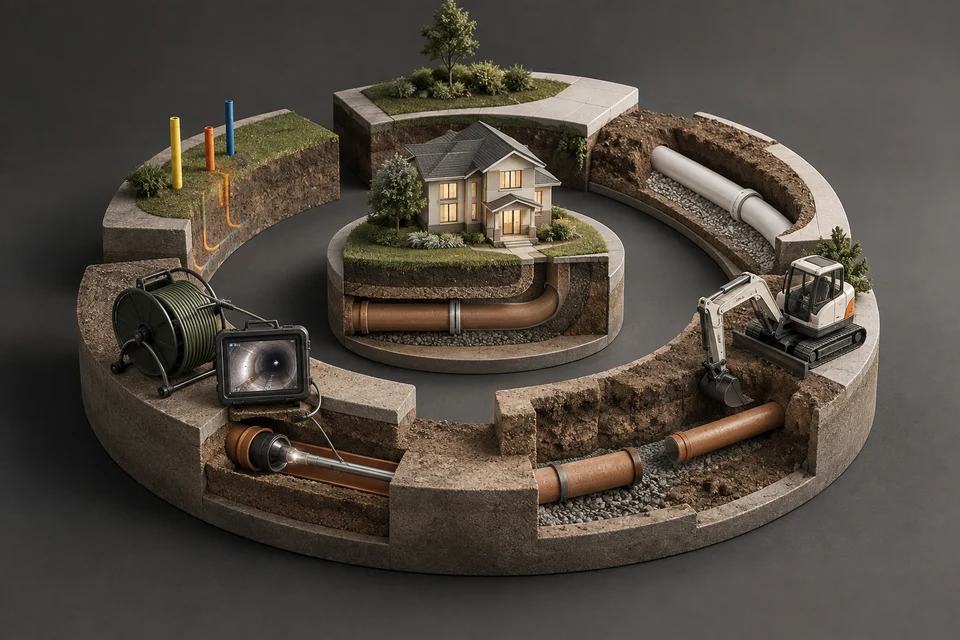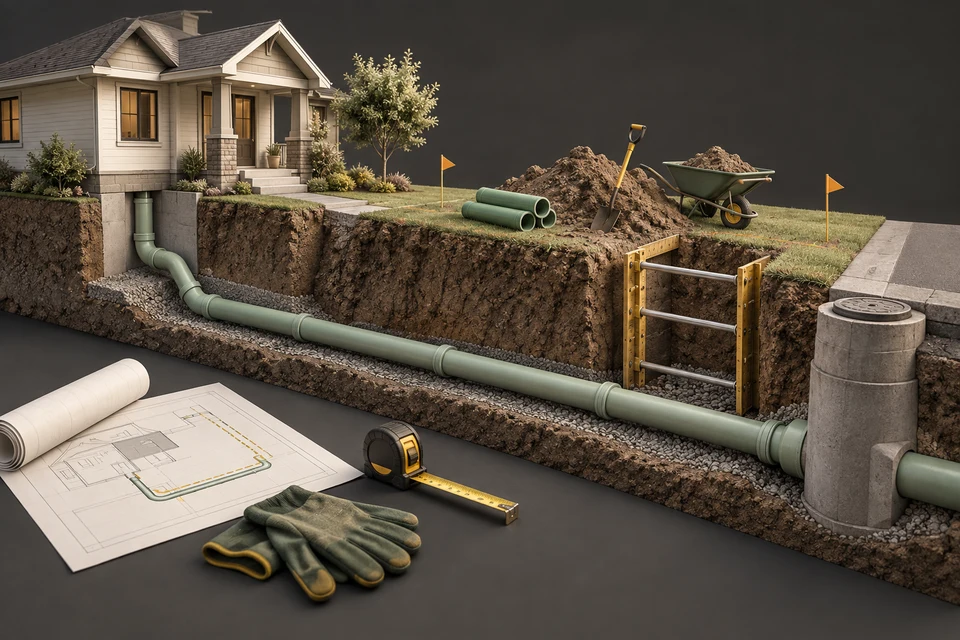
Before a Calgary sewer dig, two locates happen. The contractor requests the registered utilities through Utility Safety Partners at least three full working days ahead, longer in busy months. A private locator then marks lines the utilities do not own, including your sewer lateral, usually with a sonde on the camera cable. Within one metre either side of any mark, the line is exposed by hand or hydrovac before a machine digs.
- Utility Safety Partners asks for at least three full working days' notice and has warned of 5 to 10 business day responses in high-volume periods.
- Customer-owned lines, including water and sewer service lines, are not marked by the public locate; they need a private locator.
- Within one metre either side of a locate mark, lines must be exposed with hand tools before a machine digs; the zone is five metres for high-pressure pipelines.
- Locate paperwork states when it expires; if digging continues past that date, a relocate ticket is needed.
- Emergency and priority tickets exist for situations that threaten life, health, property or critical services.
01 /Why does a Calgary sewer dig need two different locates?
Because the buried lines in your yard have two kinds of owner. Gas, power, telecommunications and other facilities belong to utilities registered with Utility Safety Partners, which passes locate requests to them. The lines that belong to you do not appear in that system. Utility Safety Partners' FAQ says its locators cannot mark privately installed lines, secondary lines such as electrical lines past the meter, or customer-owned utilities, and gives water and sewer lines past the shut-off at the property line as the example.
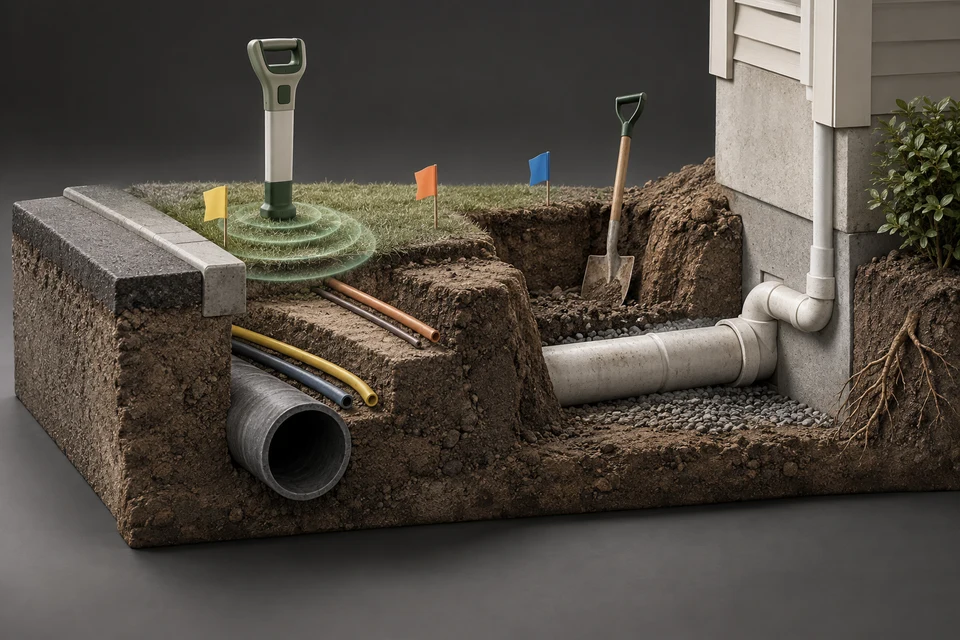
So a fully marked front yard can still hide the one pipe the job is about, plus a garage feed, a sprinkler system, a gas line to a barbecue or an old abandoned service. The public request protects the crew from the utilities' lines; the private locate finds everything else, starting with your lateral.
| Line | Marked by | Notes |
|---|---|---|
| Natural gas service and main | Utility, via Utility Safety Partners | The most important mark near a front-yard trench |
| Electrical service to the meter | Utility, via Utility Safety Partners | Lines past the meter are customer-owned |
| Telecom and cable | Utility, via Utility Safety Partners | Often shallow and close to the property line |
| Your sewer lateral | Private locator | Sonde on the camera cable, traced from the surface |
| Your water service on the private side | Private locator | Often in or near the sewer route on older lots |
| Garage feeds, lighting, sprinklers, heat lines | Private locator | Owner-installed lines are the usual surprise |
02 /How do you request a public locate through Utility Safety Partners?
The person disturbing the ground submits a locate request online through Utility Safety Partners or by phone at 1-800-242-3447, which its homeowner page lists as staffed Monday to Friday, 8:00 a.m. to 4:30 p.m. On a contracted job that is the contractor. The request describes the dig area; Utility Safety Partners notifies the member utilities, which mark their lines or send clearances.
- Notice: at least three full working days before the dig for a routine request. Weekends and holidays do not count.
- Busy season: Utility Safety Partners has posted that high volumes can stretch response times to 5 to 10 business days. Calgary's main digging season, late spring through early fall, is when the wait is most likely to stretch.
- Cost: its FAQ says utilities generally do not charge to mark their own lines, though locates requested outside normal hours may carry overtime charges.
- Paperwork: each utility's locate documentation says when the locate expires. If ground disturbance continues past that date, request a relocate ticket.
03 /What happens with emergency locates when sewage is backing up?
Utility Safety Partners runs emergency and priority tickets for urgent digs. Its FAQ defines an emergency as a threat to life, health, property or the interruption of critical services, and for an emergency ticket the excavator and equipment must be on site, or on the way to arrive, within two hours of the request. A priority ticket is for work that will start more than two hours but less than three business days after the request.
An active backup into a basement is often handled first without digging: clear the line by augering or jetting from a cleanout, camera it, and then plan the excavation on a normal or priority ticket. Whether a given dig qualifies as an emergency is the excavator's call under the rules, not a shortcut to skip the wait. If you are in the middle of a backup, CalgarySewers.com covers the first steps.
04 /How does a private locate find your sewer lateral?
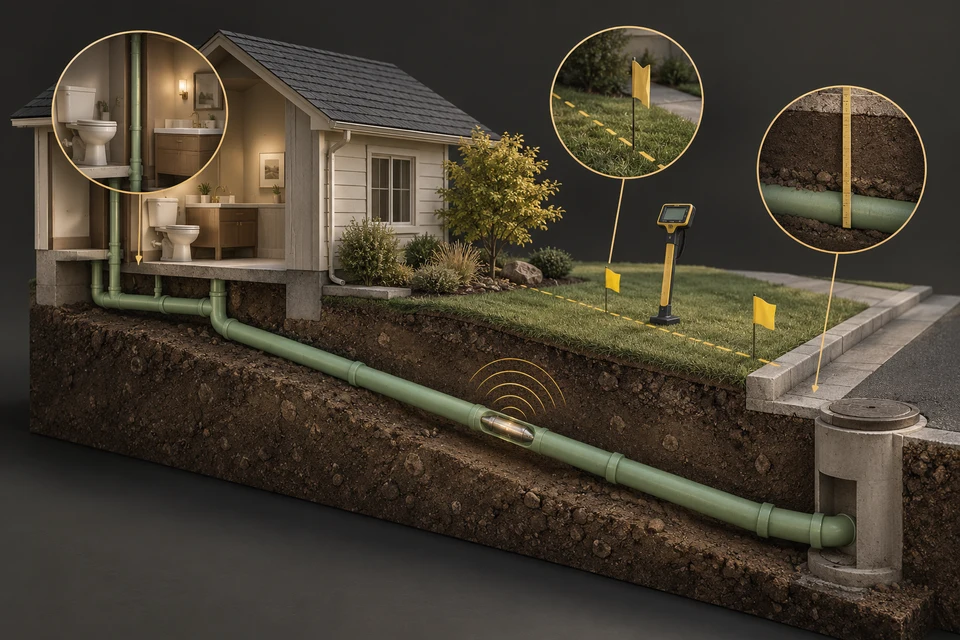
A private locator finds a sewer lateral by pushing a small radio transmitter, called a sonde, down the pipe on the camera cable and tracing its signal from the surface with a receiver. At each point the operator marks the ground and reads an estimated depth. Most lateral materials, including clay, PVC and liners, are non-metallic, so a signal cannot be put onto the pipe itself; the sonde travels inside instead.
- Mark the sonde position every few metres and wherever the pipe turns, not just at the two ends.
- Record depth at the foundation wall, mid-yard and near the property line.
- Note the counter distance at each mark so defects in the footage can be placed in the yard.
- Mark every other private line the locator finds, not only the sewer.
- Photograph the marked yard from two angles with a tape measure or known objects in frame.
Depth readings from a sonde are estimates, and metal nearby, a deep pipe or a steep drop can throw them off. Treat them as planning numbers until the pipe is exposed. The soils and depth page explains why Calgary laterals commonly read deeper than owners expect, and finding where your sewer line runs covers the indoor clues and City records that narrow the search before a locator arrives.
05 /What rules apply when digging near the marks?
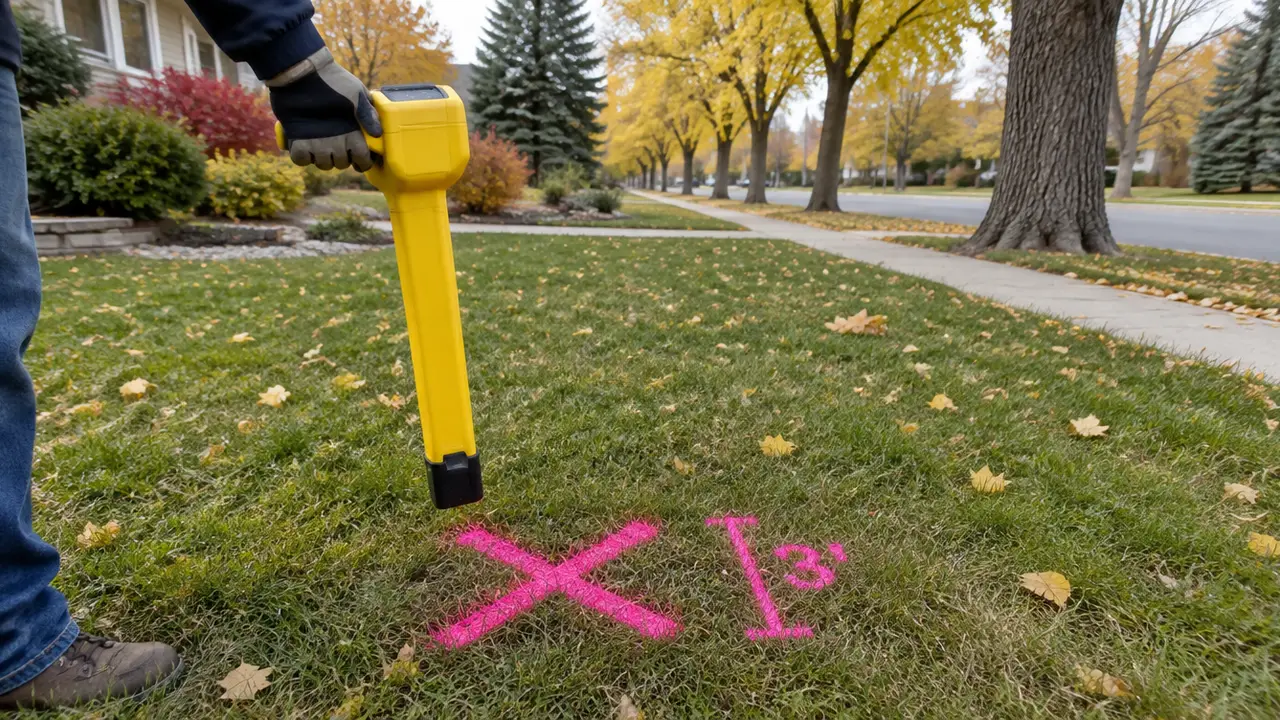
Utility Safety Partners tells homeowners that when digging within one metre either side of a locate mark, or within five metres of a high-pressure pipeline, the line must be exposed with hand tools to confirm its exact location and depth. Alberta's OHS Code sets the same principle for employers: mechanical excavation is not allowed inside a buried facility's hand expose zone until the facility has been exposed by hand digging, by a non-destructive method the owner accepts, or by an equivalent method.
- Hydrovac is the common non-destructive method on Calgary jobs: pressurized water loosens soil and a vacuum truck removes it, exposing the line without contact from a bucket.
- Marks get destroyed as a trench advances. The Code requires the employer to re-establish locate marks if work moves or destroys them.
- Crossings are normal. A sewer trench from the house to the street often crosses the gas service at right angles. The crew exposes it, supports it across the open trench and protects it during backfill.
- Frost changes the method. In winter, hand exposure through frozen ground is slow, and hydrovac or thawing is often used. See winter replacement.
06 /How do locates fit into the replacement schedule?
Locates are usually the fixed wait in the middle of the job, so book them as soon as the scope and start date are firm. Three full working days is the minimum; in summer, plan for longer. The Replacement Timeline Planner uses “allow several business days” for this step and notes that emergency locates exist, and the Permit & Locate Checklist keeps the public request and the private locate as separate items so neither is forgotten.
If a job slips past the locate expiry, a relocate ticket is needed before digging resumes. That is a common snag when a trench waits on an inspection or a cold snap. Ask your contractor how they will handle it if the schedule moves.
FAQQuestions people ask
How much notice does Utility Safety Partners need?
At least three full working days for a routine request. It has warned that high-volume periods can stretch responses to 5 to 10 business days.
Will the locate mark my sewer line?
No. Utility Safety Partners says customer-owned water and sewer lines are not marked by its members. You need a private locate, usually a sonde traced from the surface.
Do locates cost anything?
Its FAQ says utilities generally do not charge to mark their own lines, though after-hours requests may carry overtime. Private locates of customer-owned lines are paid by the owner or included in the contractor's price.
How long are locate marks good for?
The locate documentation from each utility states when it expires. If digging continues past that date, a relocate ticket is required.
Should I request the locate or leave it to my contractor?
The party disturbing the ground normally makes the request, so on a contracted job it is the contractor. Ask for the ticket number before the start date. If you are doing the dig yourself under a homeowner permit, the request is yours.
What if the private locator cannot find my lateral?
A camera that cannot get far enough, a very deep pipe or heavy metal nearby can defeat a sonde. Options include locating from a second access point, test holes by hydrovac along the likely route, or starting excavation at the foundation where the pipe exits.
Can I dig near the paint marks with a shovel?
Within one metre either side of a mark, expose the line carefully with hand tools to find its exact location and depth. Machines stay out of that zone until the line is visible.
NETWORKGo deeper across the HAUSE Sewer network
Sewer line locating and depth: how the mark on your lawn is made
How sewer line locating and depth readings work: the sonde, the hand-held locator, peak and null readings, marking, accuracy, and calling before you dig.
PipeCleaning.caHow to clean the pipes under a kitchen or bathroom sink
How to clean the pipes under a sink: remove and scrub the P-trap, clear the trap arm, fix a slow bathroom stopper, and reassemble without leaks, step by step.
DrainAugering.caDrain auger safety: how rotating cable injures, and how to stop it
Drain auger safety: how rotating cable injures hands and arms, the right gloves, foot pedal control, electrical and sewer gas hazards, and hard stop rules.