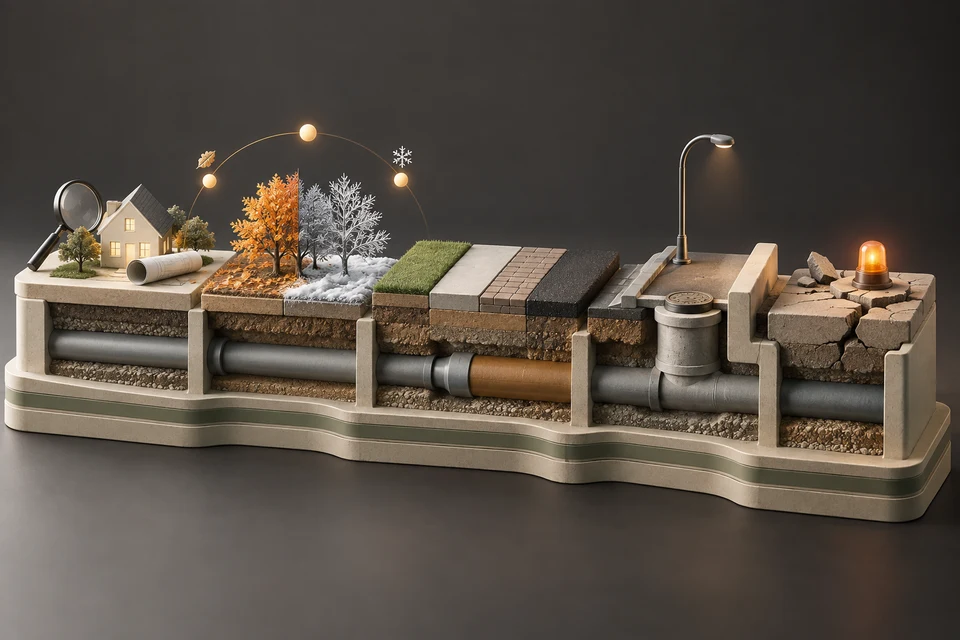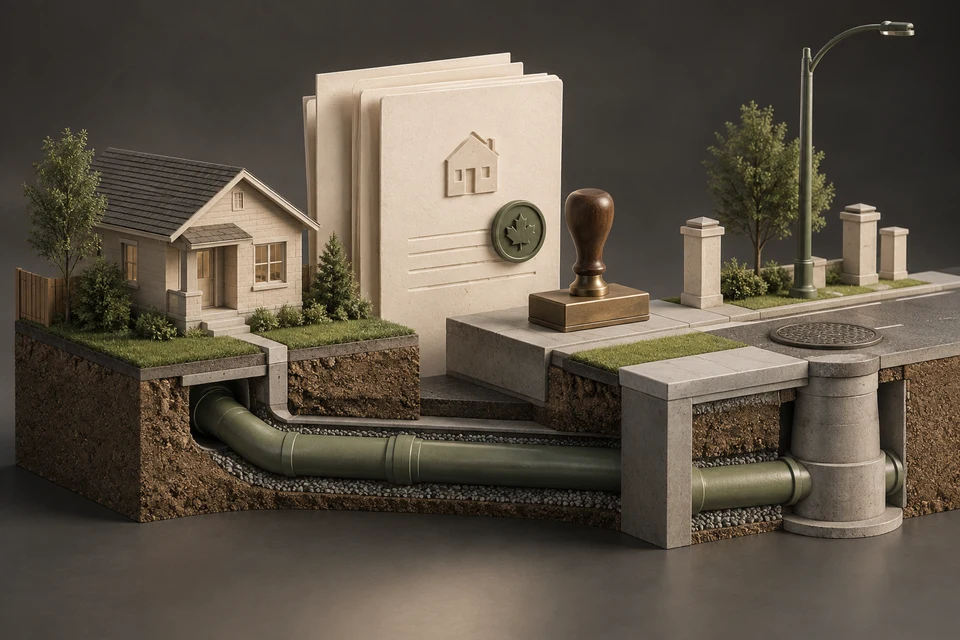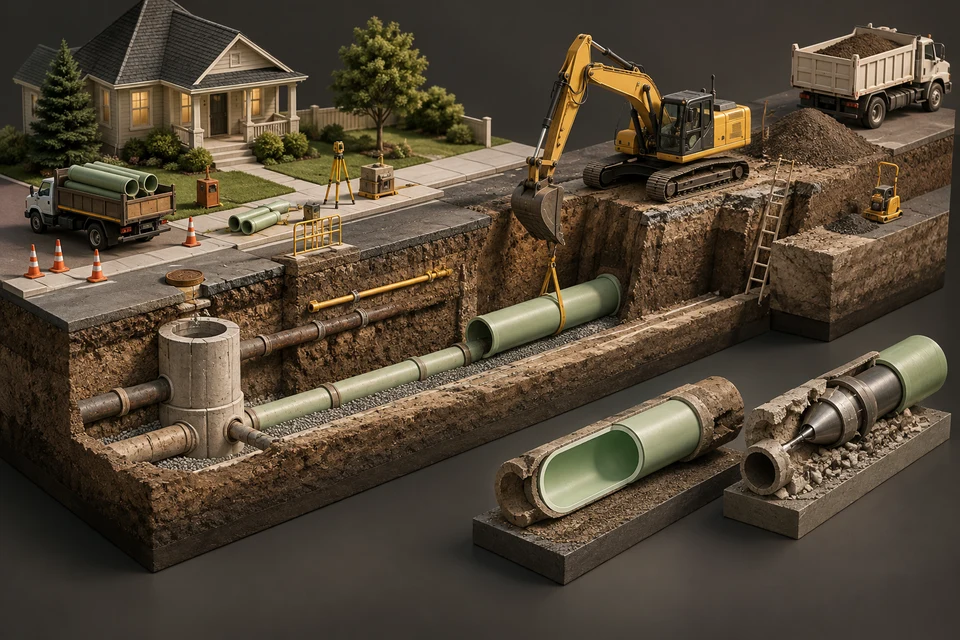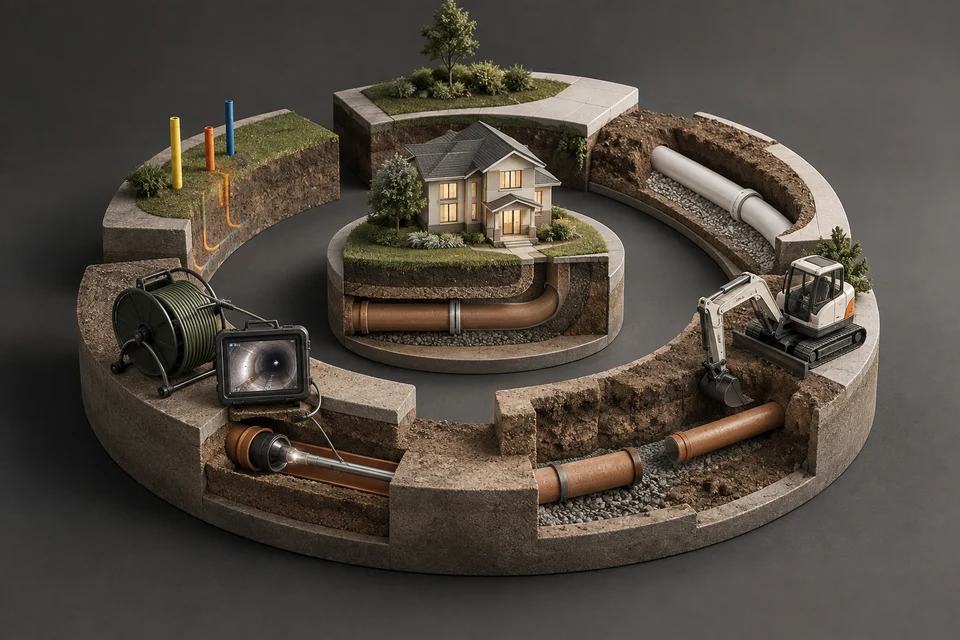
A Calgary sewer line replacement runs in nine stages: camera and locate the line, fix the scope in writing, choose the method and contractor, get the plumbing permit plus any City right-of-way permits, request Utility Safety Partners locates and a private locate, excavate or open access pits, install and inspect, backfill and restore, then file the records. Most waiting happens in permits, locates and weather, not in the digging.
- The City of Calgary lists replacing sewer lines in or around the home as work that needs a plumbing permit.
- Utility Safety Partners asks for at least three full working days of notice before digging, and warns that busy periods can stretch responses to 5 to 10 business days.
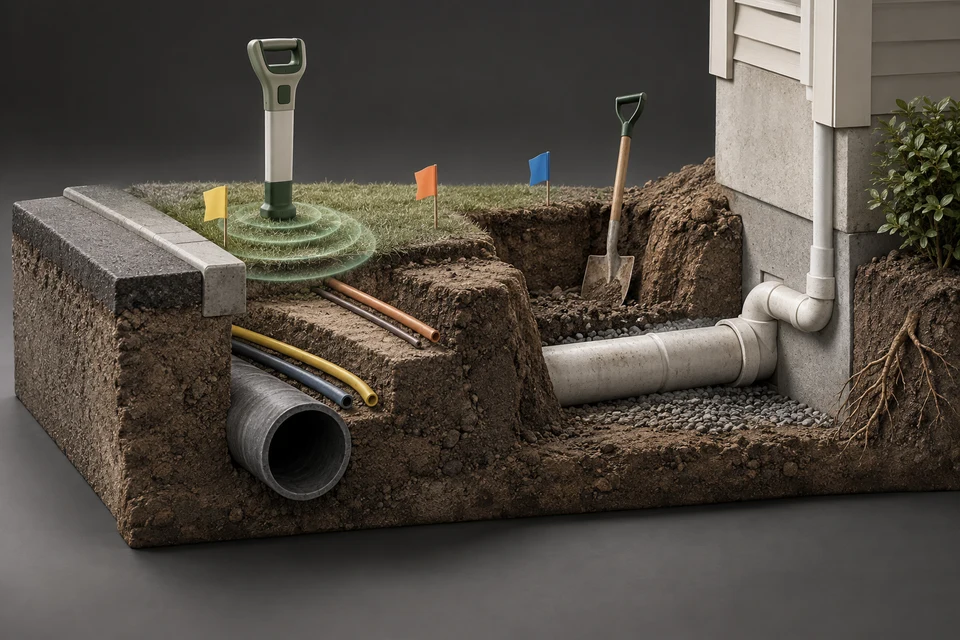
- Your own lateral is not marked by the public locate; it needs a private locate, usually a camera sonde traced from the surface.
- The City's published split puts the main-to-property-line section with the City and the property-line-to-house section with the owner, so scope and permits change the moment a dig crosses that line.
- The steps that take longest on the calendar are paperwork and scheduling; a typical open-cut dig on a house lot is measured in days.
01 /What are the stages of a sewer line replacement in Calgary?
A replacement in Calgary moves through nine stages, and each one produces something the next stage depends on. Skipping ahead is the most common cause of a stalled job: a crew cannot dig without locates, an inspector cannot pass what is already buried, and a restoration crew cannot pour a driveway over a trench that has not settled.
- Camera and locate the existing line
A recorded camera run with footage distances, plus a sonde trace marked on the surface with depth readings. This is the evidence every later decision uses.
- Fix the scope in writing
Which metres of pipe, which method, what material goes in, where the work stops relative to the property line, and what surfaces get restored.
- Choose the contractor
Confirm trade credentials, a City of Calgary business licence, WCB coverage and liability insurance before any deposit.
- Permits
A plumbing permit for the private-side work, and separate City permits if any excavation reaches the road right-of-way, including the boulevard.
- Locates
A request to Utility Safety Partners for the buried utilities, plus a private locate for lines the utilities do not own, including your sewer lateral.
- Excavate or open access
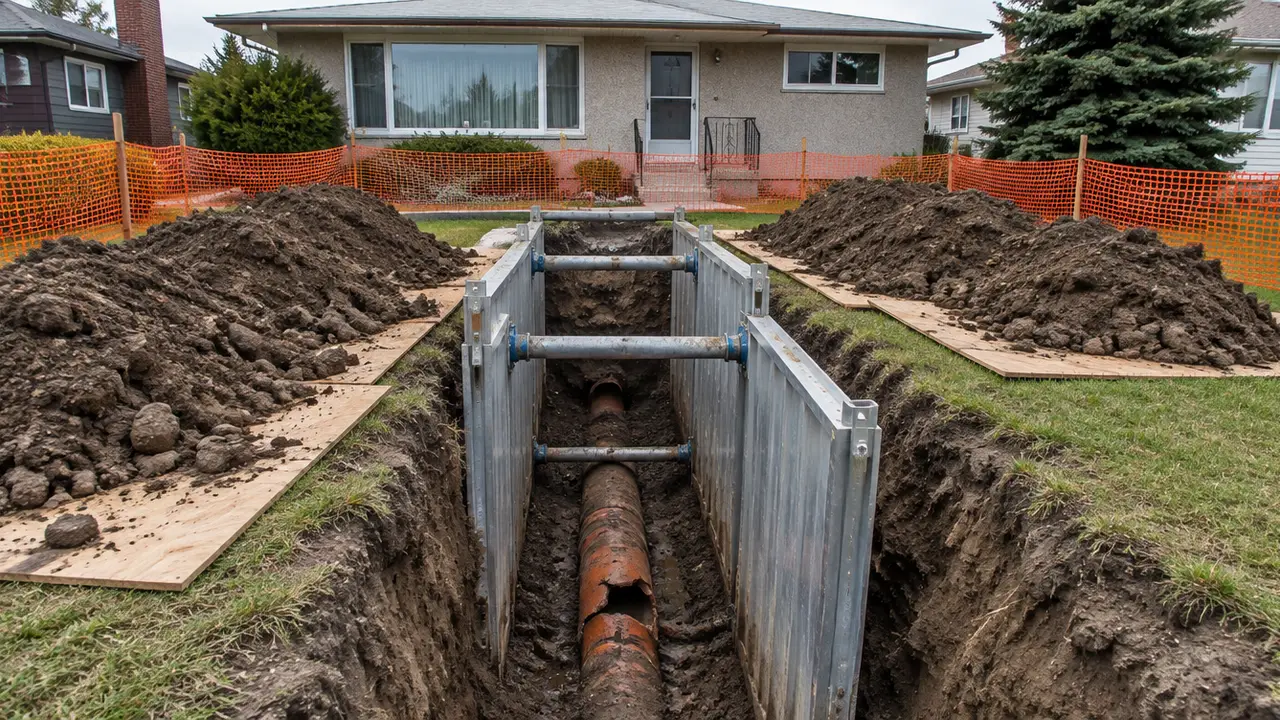
A full trench for open cut, one or two pits for bursting, or an existing cleanout for lining. Trench protection is set before anyone enters a deep excavation.
- Install and inspect
New pipe laid on bedding at a continuous grade, or a liner cured in place, then an inspection while the work can still be seen.
- Backfill and restore
Compacted backfill in lifts, then topsoil and seed, sod, landscaping or concrete. Winter restoration is often temporary until spring.
- Close out the paperwork
The after-video, the permit record, the warranty in writing, invoices and a marked-up sketch of where the new pipe runs.
The Replacement Timeline Planner turns these stages into planning ranges for your method, season and surface, and the Permit & Locate Checklist keeps the paperwork stages from slipping.
02 /What has to happen before anyone digs?
Before any ground is broken, five things should exist on paper: camera footage of the whole line, a surface mark showing where the lateral runs and how deep it is, a written scope, an issued permit, and completed locate tickets. If any one of the five is missing, the job is not ready to start, however available the crew is.
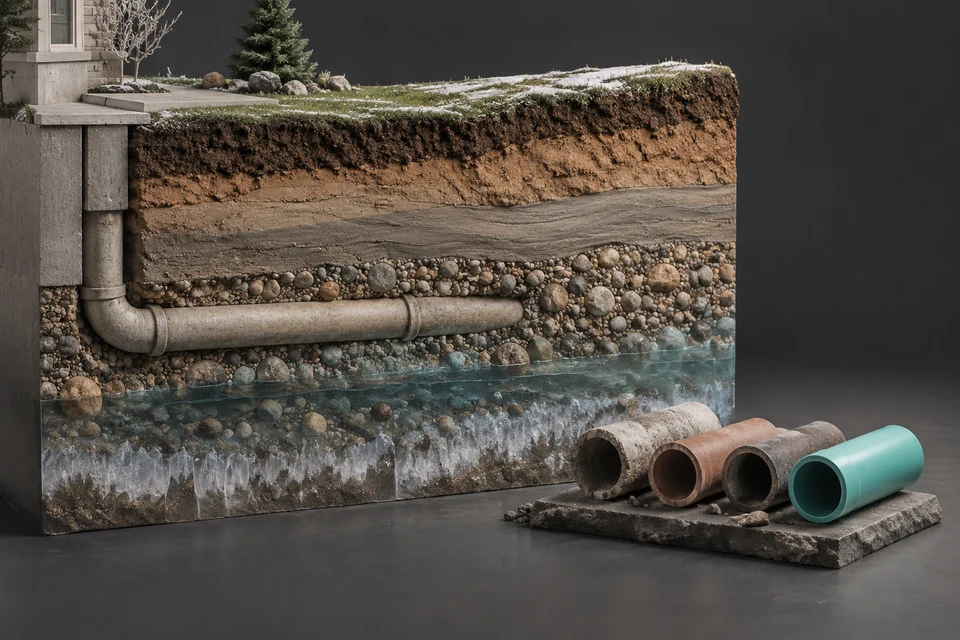
The camera footage matters more in Calgary than homeowners expect, because the line under your yard is often two or three pipes joined end to end. The City's public service line records show that about one in five City-owned service connections is coded TIL, the City's tile code, generally read as clay tile, and those sit mostly in communities built in the 1960s and 1970s. Those records cover only the City-owned portion between the main and the property line; your private section can be a different material and a different age. The footage is how you find out.
The locate is two separate requests. Utility Safety Partners handles the buried gas, power, telecommunications and other registered facilities. Its homeowner guidance says customer-owned lines, including water and sewer service lines, are not registered with it and need a private locator. For a sewer lateral that usually means a sonde pushed down the pipe on the camera cable and traced from the surface with a receiver, with depth readings sprayed or flagged at intervals. The full sequence is in utility locates for a Calgary sewer dig.
03 /How does the method change the process?
The method decides how many holes there are, how long the crew is on site and what needs restoring afterwards. The permit and locate steps apply to every method, because each one disturbs ground somewhere, even if only at an access pit. Choosing between methods is an engineering decision covered in depth at SewerReplacement.ca; this table is about how each one plays out on a Calgary lot.
| Method | Ground opened | Typical time on site | What gets inspected | Restoration |
|---|---|---|---|---|
| Open cut | A trench along the whole replaced length | About 1 to 3 days, plus frost time in winter | New pipe, joints, bedding and grade before backfill | Full trench width: lawn, landscaping or concrete |
| Lining (CIPP) | Often none if a cleanout exists; otherwise one small access pit | About 1 day | Camera before and after; reinstated connections | Little or none |
| Pipe bursting | A launch pit and a receiving pit, plus a pit at each connection | About 1 to 2 days | Pit connections and the new pipe on camera | Two or more pit footprints |
| Spot repair | One pit over the defect | About 1 day | The repaired section and both couplings | One pit footprint |
Calgary ground conditions push some jobs toward one method. The Alberta Geological Survey's mapping of the Calgary urban area describes quartzite gravel or very hard sandstone bedrock under a thin cover of till or lake sediment in many places, and notes that it makes digging difficult. Cobble layers can stall a bursting head, and a wet silt layer near the river valleys can make trench walls run. Your contractor's test hole or a neighbour's recent dig tells you more than any map. The soils and depth page covers what lies under different parts of the city.
04 /What happens on site once work starts?
On an open-cut job, the first morning is set-up: the locate marks are checked against the ground, the work area is fenced or flagged, and anything in the way is lifted and stored, such as sod, pavers or fence panels. Excavation follows the sonde marks, with hand or hydrovac exposure wherever the trench crosses a marked utility.
Alberta's Occupational Health and Safety Code sets the trench rules. Before a worker goes into an excavation more than 1.5 m deep and closer to the wall than the depth of the hole, the walls must be cut back or protected by a temporary protective structure such as shoring or a trench box. Spoil piles must sit with their leading edge at least 1 m from the excavation. Those rules decide how wide the trench is and where the dirt goes, which is why a deep Calgary lateral often takes more yard than homeowners picture. See trench safety on a Calgary sewer dig.
Once the old pipe is out, the crew shapes the bedding, lays the new pipe to a continuous fall toward the street, makes the connections at the house and at the property-line end, and calls for inspection with everything still visible. The day-by-day guide walks through a typical three-day open-cut job hour by hour.
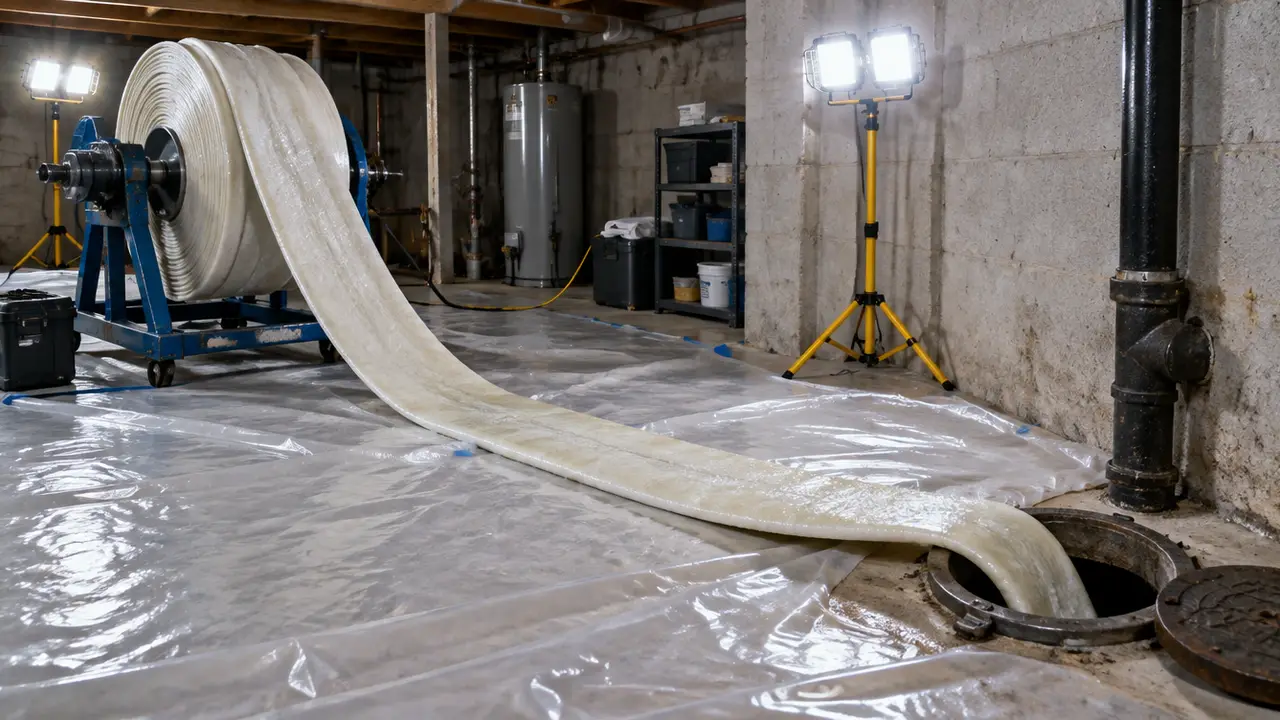
05 /When does the City of Calgary get involved?
The City is involved in two ways: as the permit and inspection authority for the plumbing work, and as the owner of everything from the property line to the main. The description attached to the City's public sanitary service line dataset says the section “from the sanitary main to the property line” is “owned and maintained by The City of Calgary”, and the section “from the property line to your house” is “owned and maintained by the homeowner.” That is the City's published position; call 311 about any specific case.
- If the defect is on your side: your contractor works under a plumbing permit and the dig stays on your lot.
- If the defect is at or past the property line: report it to 311 with the footage and footage-counter distances before you pay anyone to dig there.
- If the dig needs to reach the boulevard, sidewalk or road: the City's excavation permit applies to any digging into the road right-of-way, which the City defines to include the area between the property line and the sidewalk and between the sidewalk and the curb.
- If the City has already relined its section: the City's records show a CIPP code with the relining date. Your contractor needs to know that before planning a connection at the property line.
The full City-side process, including who may work in the right-of-way, is in working on the City side.
06 /How long does a Calgary sewer replacement take from start to finish?
A planned replacement usually takes a few weeks from first camera to finished restoration, while the crew is on site for only a few days of that. The calendar is mostly quotes, the permit, the locate window and, for concrete, curing time. An emergency compresses the front end but not the locate rules.
| Stage | Planning range | What stretches it |
|---|---|---|
| Camera and quotes | 1–2 weeks (emergency: 1–2 days) | Contractor availability in peak season |
| Permits | Days to a few weeks — confirm with the City | City-side work adds separate permits |
| Utility locates | Allow several business days | May to September volumes |
| Work on site | Open cut 1–3 days, lining 1 day, bursting 1–2 days, spot repair 1 day | Winter frost adds 1–2 days |
| Inspection | Book with the City or inspector | Next-day slots depend on booking time |
| Backfill and restoration | Lawn: seed now, full recovery next season; concrete: days to weeks | Winter restoration is often temporary |
Run your own combination through the Replacement Timeline Planner. When the timeline is clear, request quotes with your footage and locate marks so every contractor prices the same job.
07 /What should you have in hand when it is finished?
You should finish with a small file that proves what was done: the before and after videos, the permit number and inspection result, a sketch with measurements showing where the new pipe runs and how deep it is, the material installed, the warranty terms in writing, the invoices and the restoration scope. Those documents answer the questions a future buyer's inspector, an insurer or your own next contractor will ask. Keeping sewer replacement records lists each item and why it matters.
The crew is on your lot for days. The paperwork follows the house for decades.
FAQQuestions people ask
Is a plumbing permit required for a Calgary sewer line replacement?
Yes. The City of Calgary's homeowner permit page lists replacing water and sewer lines in or around the home as work that needs a plumbing permit. A hired contractor applies for it; an eligible owner doing the work personally can apply for a homeowner permit.
Who calls for the utility locates?
Usually the contractor, because they are the one disturbing the ground. Ask to see the locate ticket before digging starts. Your own sewer lateral needs a private locate, because public locates do not cover customer-owned lines.
Will the City replace its part of the line at the same time?
Not automatically. The City owns and maintains the section from the main to the property line. If your camera shows a defect there, report it to 311 with the footage so the City can assess its side before or alongside your work.
How long will my yard be dug up?
For a typical open-cut lateral, the trench is usually open for one to three days, longer in frozen ground. Lawn recovery takes into the next growing season, and concrete needs time to cure after it is poured.
Can the whole process be done in winter?
Yes, with more time and cost for frost, and often with temporary surface restoration until spring. Many owners keep a failing line flowing through winter and schedule the dig after the thaw if the line allows it.
NETWORKGo deeper across the HAUSE Sewer network
Should you scope the sewer before buying a house?
When a sewer scope before buying a house is worth it, which homes need one most, how to fit it inside a condition period, and what to do with the result.
SewerRoots.caWhose tree, whose pipe: who pays when roots block a sewer line
Who is responsible when a city or neighbour's tree sends roots into your sewer line: the general Canadian pattern, the evidence, and how to raise it.
SewerQuotes.comSewer line replacement cost: open-cut vs trenchless, line by line
Sewer line replacement cost in Canada for 2026: open-cut, CIPP lining and pipe bursting planning ranges in CAD, per-metre math, line items and what moves price.