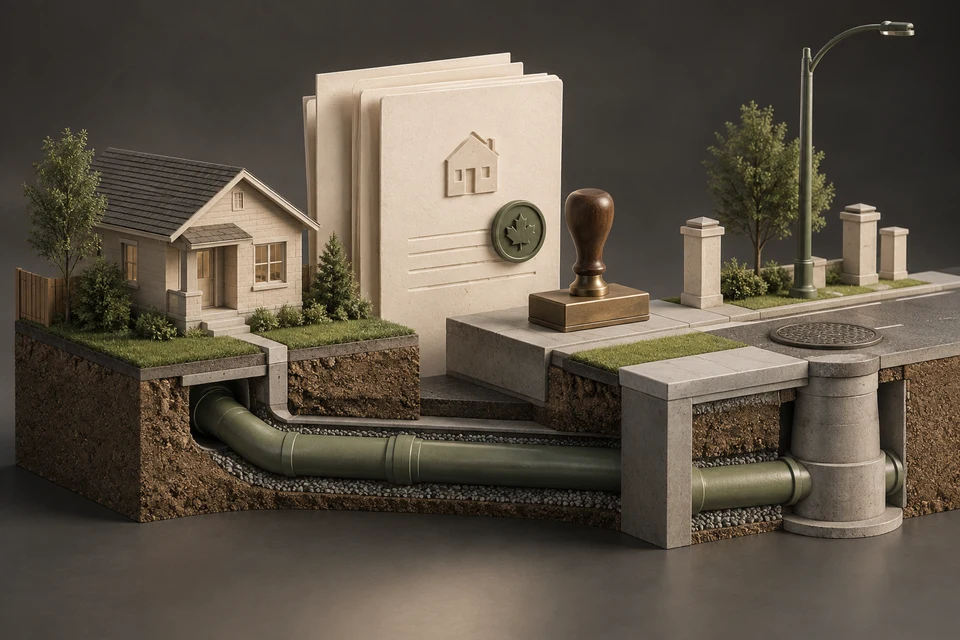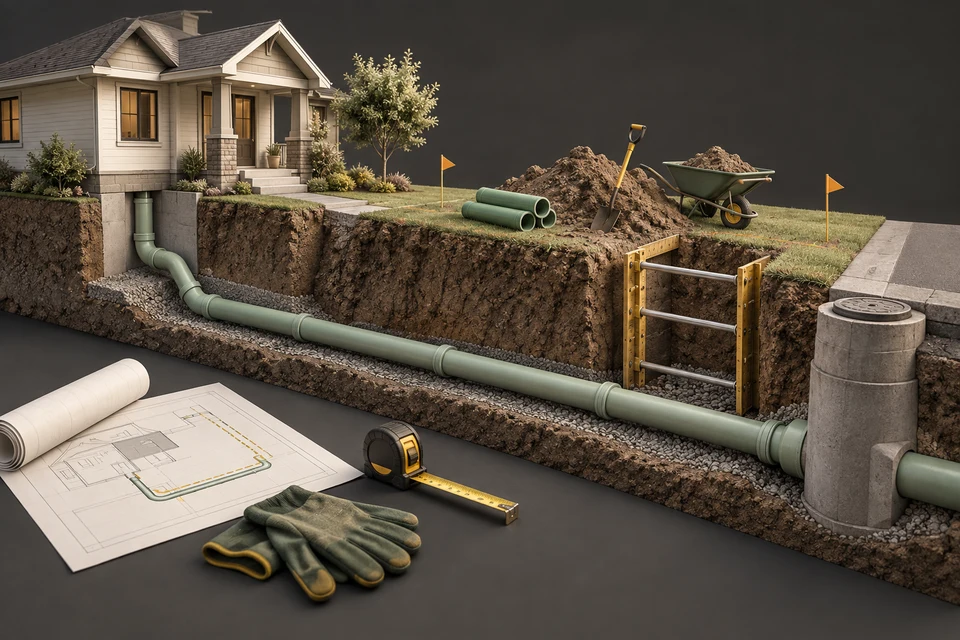
Legally, often yes: the City of Calgary issues homeowner plumbing permits to legal owners who live in the home and do the work themselves, and replacing sewer lines is permit work. Practically, a Calgary lateral usually sits deeper than 1.5 m, in clay or cobble, near gas and power lines, so the excavation, trench protection and grade are where owner projects fail. Many owners hire the dig and pipework and do the prep and restoration themselves.
- The City's homeowner permit requires you to own the home, live in it or intend to, and do the work personally.
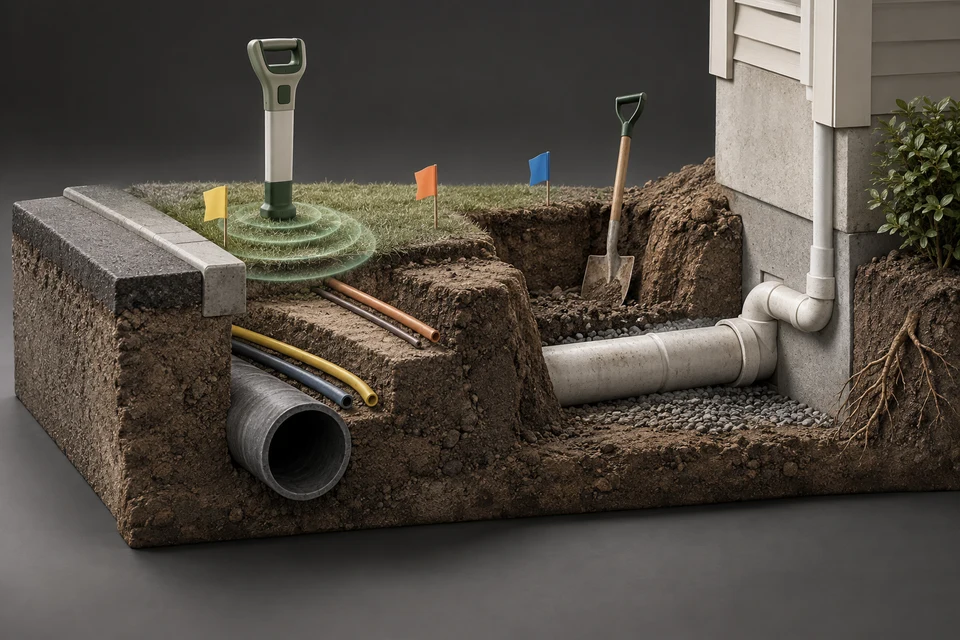
- Locates through Utility Safety Partners come first, plus a private locate for the sewer lateral itself, which the public locate does not mark.
- Utility Safety Partners tells homeowners to expose lines with hand tools when digging within one metre either side of the locate marks.
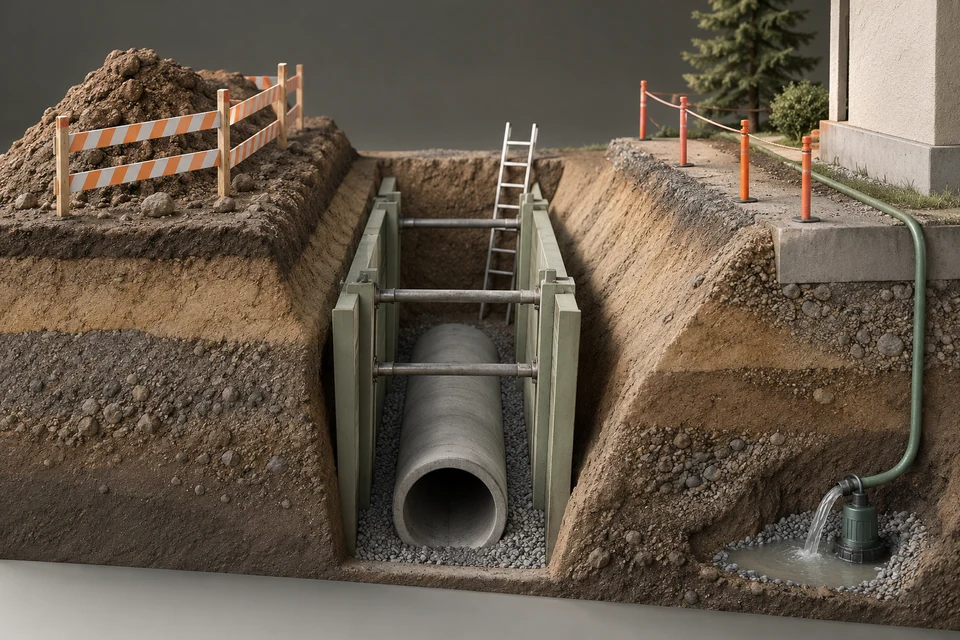
- Alberta's trench rules start at 1.5 m depth; most basement-house laterals in Calgary are deeper than that for most of their length.
- The realistic owner share of the job is planning, documentation, surface prep and restoration.
01 /Is it legal to replace your own sewer line in Calgary?
It can be. The City of Calgary issues homeowner plumbing permits, and its permit page lists replacing water and sewer lines in or around the home as plumbing permit work. To qualify, you must be the legal owner, you must live in the home or intend to, and you must be doing the work yourself. A rental property does not qualify, and homeowner permits are not issued for apartment-style condominiums.
Qualifying for the permit does not change what the work has to meet. The pipe, fittings, bedding, slope and connections are inspected against the same plumbing code as a contractor's job, and the same locate and excavation rules apply to the ground you disturb. The permit is permission to do the work, not a lower standard for it.
02 /What makes a Calgary sewer lateral a hard owner project?
Three things make it hard: depth, ground and what else is buried nearby. None of them shows from the surface.
| Factor | Why it matters | What it takes to handle it |
|---|---|---|
| Depth | In a house with a basement, the drain leaves below the basement floor, so the lateral starts deep and falls toward the street | Trench protection past 1.5 m, a machine big enough to reach, and a place for a lot of spoil |
| Ground | Calgary sites mix clay-rich till, silt, gravel and cobble; clay can stand and then slump, silt can flow when wet | Reading the soil as you dig and protecting the walls to the least stable layer |
| Other utilities | Gas, power and telecom services often cross the front yard between the house and the street | Locates, hand exposure near the marks, and care with the bucket |
| Grade | The new pipe needs a continuous fall with no belly; a few centimetres wrong over a few metres shows up on camera | A laser or transit and bedding shaped to the line |
| Connections | The new pipe must join the old building drain and the City section, often different materials and sizes | The right transition couplings and support at each joint |
| Weather and time | An open trench in Calgary can take rain, a cold snap or a thaw within one job | A plan to cover, pump or heat, and to finish before conditions change |
03 /What does the trench-safety line at 1.5 metres mean for an owner?
Alberta's Occupational Health and Safety Code requires that before a worker enters an excavation more than 1.5 m deep and closer to the wall than the excavation is deep, the walls are cut back or supported by a temporary protective structure. The Code is written for employers and workers, so it applies as soon as you pay anyone to help, and its reasoning applies to you regardless: soil does not know who hired whom.
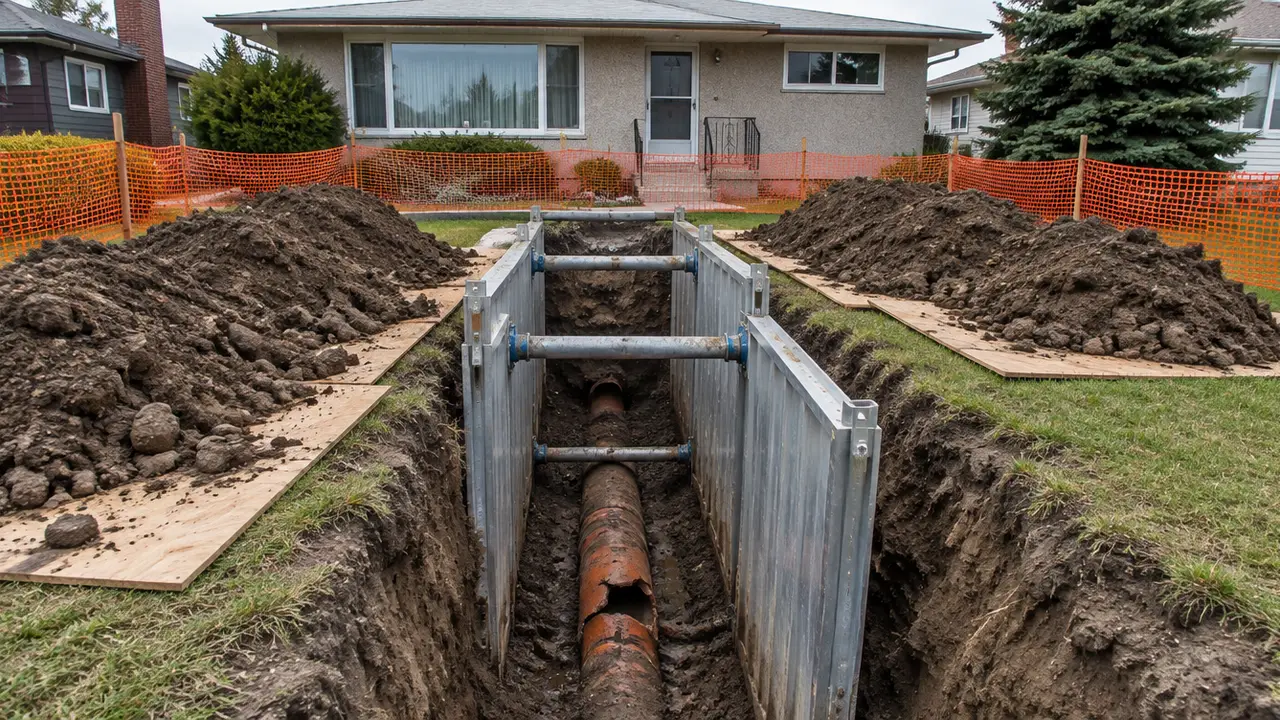
Cutting back walls in Calgary soil takes room. For soil the Code classes as hard and compact, the walls above the bottom 1.5 m are sloped at not less than 30 degrees from vertical; for soil likely to crack or crumble, including ground that has been dug before, not less than 45 degrees; and for soft, sandy or loose soil, the slope starts at the bottom of the trench. Your old sewer trench is previously excavated ground. On a 2.5 m deep lateral, sloped walls can turn a narrow slot into an excavation several metres across at the top, which most front yards do not have room for. Renting a trench box or shoring is usually the practical answer, and it needs a machine to set it.
The rest of the Code's excavation rules are in trench safety on a Calgary sewer dig.
04 /What do locates require before an owner digs?
Every dig starts with a locate request to Utility Safety Partners, which asks for at least three full working days' notice and has warned that busy periods can stretch responses to between 5 and 10 business days. Its FAQ says utilities generally do not charge to mark their own lines. Its homeowner guidance is plain on two points owners often miss.
- Your own lines are not marked. Customer-owned facilities such as water and sewer service lines, sprinkler lines and lines running between buildings are not registered with Utility Safety Partners. You need a private locator to mark them, and your sewer lateral is one of them.
- Hand-expose near the marks. If you dig within one metre either side of a locate mark, or within five metres of a high-pressure pipeline, expose the line with hand tools first to find its exact location and depth.
Alberta's OHS Code treats hand-digging no deeper than 300 mm as not being a ground disturbance, which is why planting a shrub is different from digging a trench. A sewer lateral is many times deeper than that. Utility locates for a Calgary sewer dig walks through both requests.
05 /Which parts of a sewer replacement can an owner realistically do?
Most owners who want to be hands-on do best by taking the work before and after the trench, and hiring the trench and pipe. That split keeps the dangerous and inspected work with a certified crew and still removes hours from the invoice.
| Owner | Hired crew |
|---|---|
| Collect the footage and build the lot sketch | Private locate with sonde and depth readings |
| Clear the work path: lift and store pavers, remove fence panels, move planters | Public locate request and hand exposure near marks |
| Cut and roll sod you want to reuse, where timing allows | Excavation, trench protection, dewatering |
| Arrange neighbour access and parking | Pipe, bedding, connections, cleanouts |
| Photograph the trench and joints from the surface before backfill | Inspection booking, testing, after-video |
| Topsoil, seed or sod, planting and relaying pavers after the settlement period | Backfill and compaction in lifts |
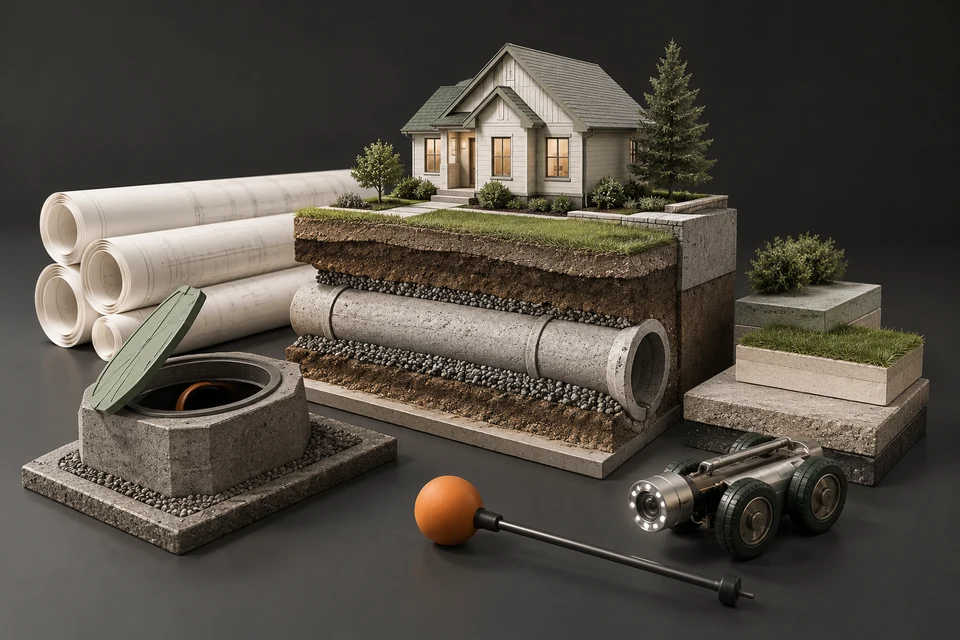
If you go further and take the whole job, treat the hired-crew column as your own checklist, get the permit first, and read the replacement process step by step end to end before renting anything.
06 /If you do the whole job, what is the order of work?
- Permit
Apply for the homeowner plumbing permit and ask what the inspector will need exposed.
- Locates
Request through Utility Safety Partners at least three full working days ahead, and book a private locate for the lateral.
- Equipment
Excavator sized for the depth, trench box or shoring, laser level, compactor, pump, tarps and barricades.
- Dig and protect
Hand-expose near every mark, keep spoil at least 1 m from the edge, and protect the walls before anyone goes past 1.5 m.
- Lay and connect
Shape bedding, lay to a continuous fall, and use proper transition couplings at the building drain and property-line ends.
- Inspect
Book through 311 or VISTA by 2 p.m. the day before; leave everything exposed.
- Backfill and restore
Place and compact backfill in lifts, then restore the surface, allowing for settlement.
Stop and call a professional if you find an unmarked line, a gas smell, water entering the trench faster than you can pump it, a wall that cracks or bulges, or pipe that cannot be connected with the fittings you have. The Permit & Locate Checklist works for owner-run jobs as well as contracted ones.
FAQQuestions people ask
Can I replace my sewer line myself in Calgary?
If you own the home, live in it or intend to, and do the work yourself, the City issues homeowner plumbing permits for this work. It must still pass inspection, and the excavation carries serious safety risks.
Can I pull a homeowner permit and have a friend do the work?
The City's condition is that you do the work yourself. If someone else does it for pay, they should be a qualified contractor holding their own permit.
Do I need locates if I dig by hand?
Yes for a sewer trench. Alberta's OHS Code exempts only hand-digging no deeper than 300 mm, and a lateral is far deeper. Request locates through Utility Safety Partners and a private locate for your own lines.
Can I rent a trench box?
Equipment rental firms rent trench boxes and shoring, but they must suit the depth and be set by a machine. If the trench will pass 1.5 m and you cannot protect it, hire the dig.
What can go wrong with DIY grade?
A belly where the pipe dips holds water and solids, which leads to repeat clogs. Inspectors and cameras find it; fixing it means digging again.
NETWORKGo deeper across the HAUSE Sewer network
Sewer camera inspection certification and training: what it proves
Sewer camera inspection certification and training in Canada: NASSCO PACP and LACP, home inspector courses, safety training and what a credential proves.
SewerQuotes.comHow to compare sewer quotes line by line
How to compare sewer quotes: a line-by-line worksheet to normalise scope, spot missing items, convert to per-metre cost and choose between three contractor quotes.
DrainAugering.caWhat drain augering is, and how a spinning cable clears a clog
Drain augering explained: how a rotating steel cable reaches, bores through and retrieves a clog, what it clears well, and where augering stops working.