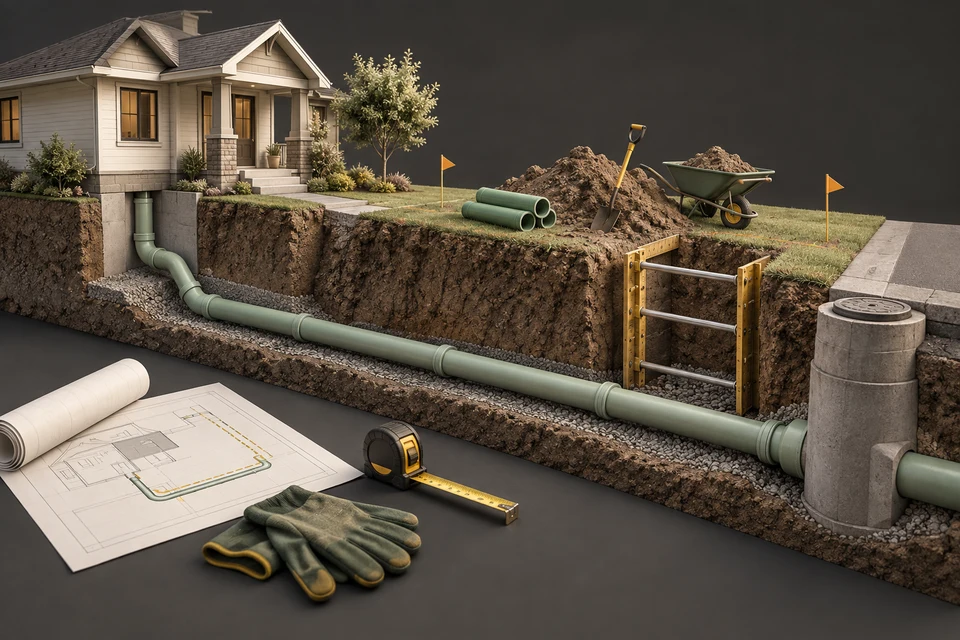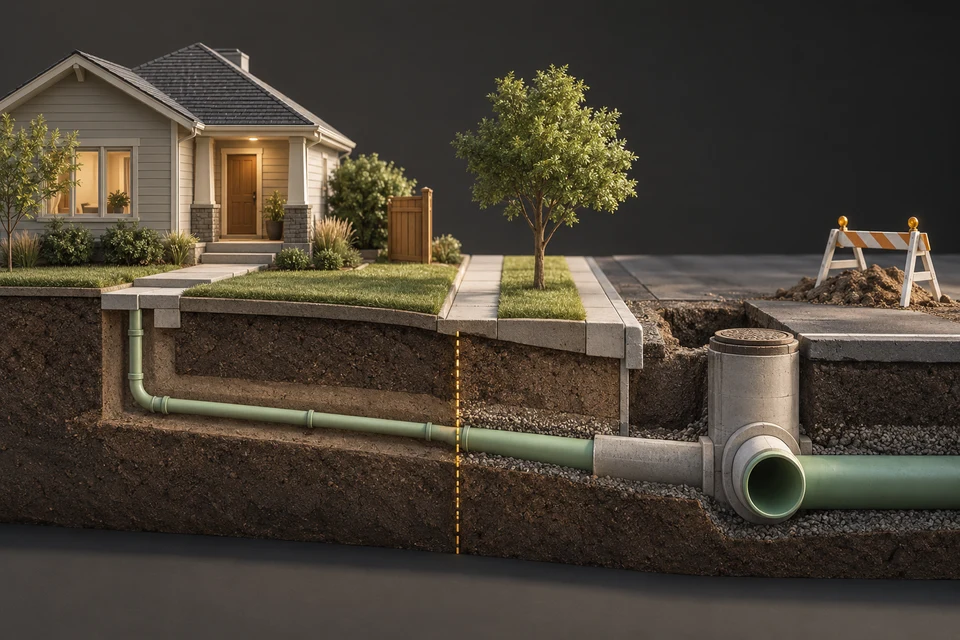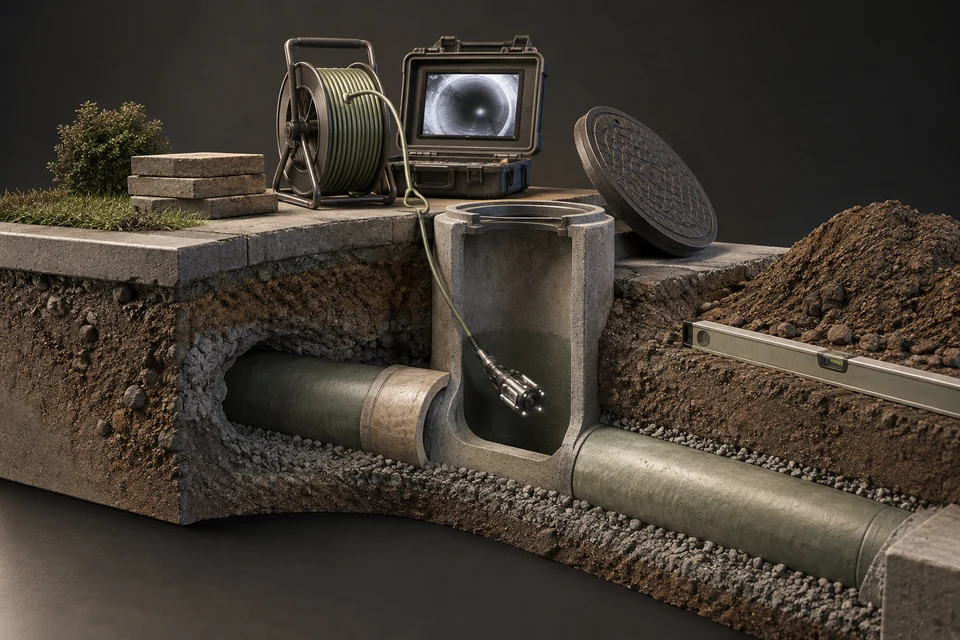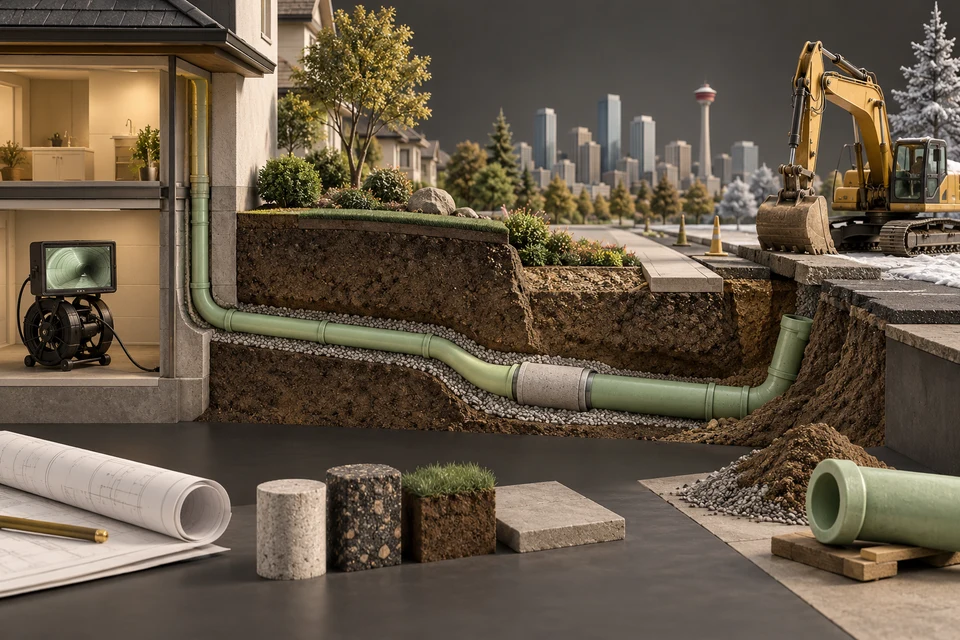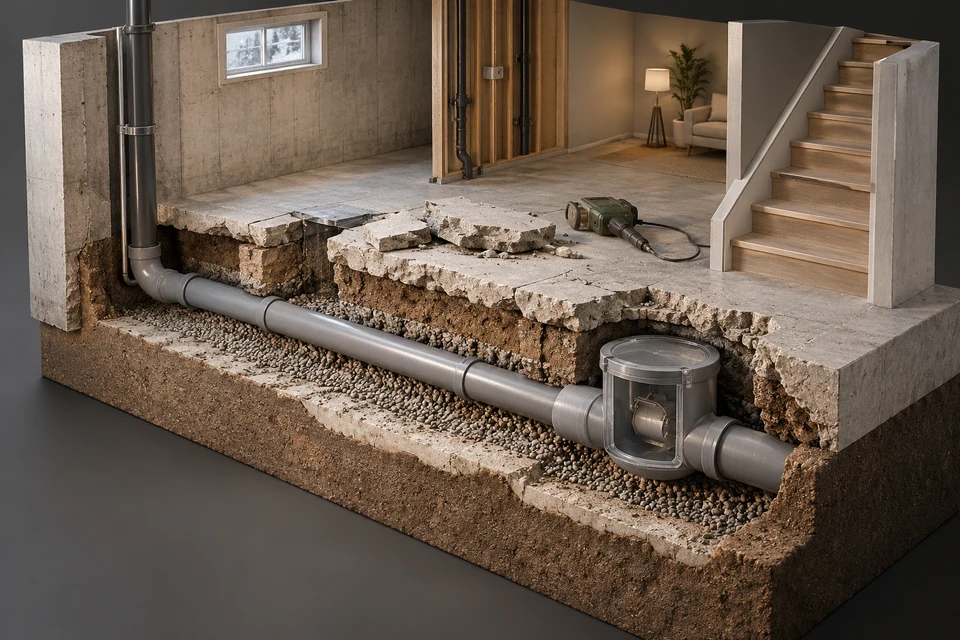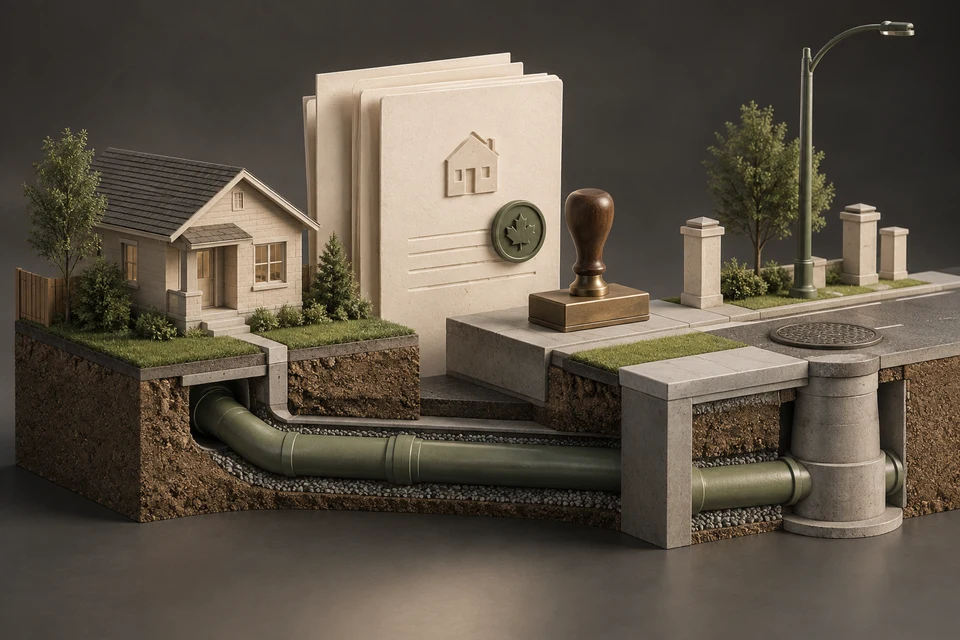
The City of Calgary requires a plumbing permit when a plumbing system is constructed, extended or altered, and it names replacing water and sewer lines in or around the home as part of that. A hired contractor applies in its own name; an owner doing the work personally in a home they live in can get a homeowner permit. Work that reaches the boulevard, sidewalk or road needs separate City right-of-way permits.
- Replacing a sewer line in or around the home is listed by the City as plumbing permit work.
- The City lists repairing a drainage leak and removing a blockage as work that does not need a plumbing permit; confirm how a spot repair is treated before starting.
- A homeowner permit is only for the legal owner who lives in the home and does the work personally.
- Inspections are booked through 311 or a VISTA account, and next-day requests must be in by 2 p.m.
- Digging into the road right-of-way, which includes the boulevard, needs a City excavation permit in addition to the plumbing permit.
01 /Do you need a plumbing permit to replace a sewer line in Calgary?
Yes. The City of Calgary's homeowner permit page says a plumbing permit is required when a plumbing system is constructed, extended or altered, and that this includes replacing water and sewer lines in or around the home. A full lateral replacement, a partial replacement, a trenchless replacement and a new building drain under the basement slab all fall inside that description.
The same page lists three things that do not need a plumbing permit: repairing a leak in a water distribution or drainage system, replacing existing faucets and fixtures, and removing a blockage in the drainage. That is why a drain cleaner can auger or jet your line without a permit. It also creates a grey zone for spot repairs, where one cracked section is cut out and replaced. Do not assume either way. Ask the City's plumbing safety codes officers through 311 before the work, and keep a note of the answer and the date.
02 /Who applies for the permit: the contractor or the homeowner?
Whoever does the work applies. The City's permit pages say contractors can apply for all permit types, and that if you hire someone to do the work, they apply for the permit. To pull trade permits in Calgary, a business registers as a City Qualified Trade and holds a contractor business licence, and registered contractors apply online through the City's VISTA system.
A homeowner permit exists for owners doing their own plumbing. The City sets three conditions, all of which must be true:
- You own the home. You must be the legal owner.
- You live in it or intend to. A rental property does not qualify.
- You are doing the work yourself. You cannot take out a homeowner permit on behalf of a contractor.
Homeowner permits are not available for apartment-style condominiums. The City says individually owned condominium townhouses are acceptable with authorization from the condo board, and that homeowner work can only serve that home, including a secondary suite within it. If you are weighing doing the dig yourself, read replacing your own sewer line in Calgary first; the permit is the easy part.
03 /How much does a City of Calgary plumbing permit cost?
The City publishes a flat homeowner plumbing permit fee, while contractor permits are priced from its building and trade permit fee schedule. On the date this page was checked, the City's homeowner permit page listed a homeowner permit fee of $112 plus a 4 percent Safety Codes Council fee of $4.50, for a total of $116.50.
Permit fees are a small share of a sewer replacement. What moves the total is depth, length, surface and whether City-side work is involved; those drivers are laid out step by step in what drives sewer replacement cost in Calgary, and Calgary price ranges are covered in depth at CalgarySewerReplacement.com.
04 /What other City permits can a sewer replacement need?
The plumbing permit covers the pipe on your property. Anything that touches City land brings in the City's roads and parks rules, each with its own application and lead time.
| Permit or approval | When it applies | Lead time the City publishes |
|---|---|---|
| Plumbing permit | Replacing sewer lines in or around the home | Apply before work; book inspections through 311 or VISTA |
| Excavation permit | Breaking or digging into the surface of the road right-of-way, including the area between the property line and the sidewalk and between the sidewalk and the curb | Up to two business days to process; up to 10 business days if the pavement was laid in the last two years |
| Street use permit | Exclusive use of a street, sidewalk, alley, walkway, back lane or boulevard, for example a bin or equipment staging | Minimum reviews of 5, 10 or 15 business days depending on impact |
| Tree protection plan | Construction activity within six metres of a public tree | Submitted to Parks Urban Forestry; ask 311 for current timing |
| Service connection in the right-of-way | New water, sanitary or storm connections on City property | Must be installed by a contractor on the City's indemnified list; see new sewer line to the street |
| Condo board authorization | Homeowner permit work in an individually owned condominium townhouse | Set by the board |
Most private-side replacements need only the plumbing permit. The others appear when the trench has to reach or cross the property line, when a bin or excavator must sit on the boulevard or in the lane, or when a City tree stands near the dig. Working on the City side explains how those pieces fit together.
05 /How do sewer permit inspections work in Calgary?
Inspections are booked by calling 311 or through the permit holder's VISTA account. The City says requests for an inspection the following day must be made by 2 p.m., and that you can call 311 on the morning of the inspection to find out whether it will be in the morning or the afternoon. Plan the trench schedule around that window rather than digging on a Friday and hoping for a Monday visit.
What an inspector needs to see on a buried sewer is the work itself: the pipe, the joints, the bedding, the fall, the connections and any cleanouts, before backfill covers them. Ask the inspector, through the permit holder, exactly what must be exposed and whether a test or camera run is expected. Inspections on a Calgary sewer replacement covers the checks in detail.
If a replacement was buried without a permit, the City's page describes a concealed plumbing procedure: a homeowner permit cannot be issued for concealed work, the owner must hire a licensed plumbing contractor to obtain a permit and check the work, and the inspector may ask for it to be exposed. On a sewer line, exposing means digging it up again.
06 /What should you do with the permit once the job is done?
Keep the permit number, the final inspection result and the date together with the after-video and the as-built sketch. A future buyer, an insurer or a contractor tracing a new problem will ask whether the work was permitted, and a permit number the City can look up is a better answer than an invoice alone. The Permit & Locate Checklist ends with filing these for the house records, and keeping sewer replacement records lists what else belongs in the file.
FAQQuestions people ask
Does a Calgary sewer line replacement require a plumbing permit?
Yes. The City of Calgary lists replacing water and sewer lines in or around the home as work that needs a plumbing permit.
How much is a City of Calgary plumbing permit?
In September 2026 the City listed a homeowner plumbing permit at $112 plus a 4 percent Safety Codes Council fee, $116.50 in total. Contractor permit fees follow the City's fee schedule, which the City says rises every January 1.
Can I get a homeowner plumbing permit for a rental property?
No. The City's conditions require you to own the home, live in it or intend to, and do the work yourself. Rental properties do not qualify.
Does drain cleaning need a permit?
No. The City lists removing a blockage in the drainage as work that does not require a plumbing permit.
How do I book a plumbing inspection in Calgary?
Call 311 or use the permit holder's VISTA account. The City says next-day inspection requests must be made by 2 p.m.
Do I need a separate permit to dig in the boulevard?
Yes. The City's excavation permit applies to breaking or digging into the road right-of-way, which it defines to include the boulevard areas between the property line, sidewalk and curb.
NETWORKGo deeper across the HAUSE Sewer network
Sewer permits, inspections and who pays: owner or city?
Sewer line permits and who pays in Canada: the usual owner vs city split, permit and inspection costs, road cuts, city tree roots and what to confirm.
SewerRoots.caWhose tree, whose pipe: who pays when roots block a sewer line
Who is responsible when a city or neighbour's tree sends roots into your sewer line: the general Canadian pattern, the evidence, and how to raise it.
SewerInspector.caSewer scope inspections in Edmonton: what to expect and who to call
Sewer scope and sewer line inspection in Edmonton: what mature and newer neighbourhoods show on camera, cold and clay soils, elms, EPCOR and 311 checks.